
How to Create a Billboard Mockup with Modor
How to Create a Billboard Mockup with Modor
How to Create a Billboard Mockup with Modor: Design essentials, tips, and common mistakes

Introduction
Billboard mockups have become one of the best ways for designers and marketers to present outdoor campaigns with clarity and realism. Instead of imagining, clients can see how a concept will appear on streets, highways, or rooftops. These mockups help identify visibility issues, refine layouts, and ensure that every visual element works effectively in its intended environment.
As outdoor advertising continues to expand, brands need fast, dependable ways to create billboard mockups that look polished without complex software. Modor makes this possible through high-quality templates, intuitive controls, and photorealistic results.
In this blog, we will cover everything from what billboard mockups are to how you can create them with modor. So let’s get started.
Key Takeaways
Modor makes billboard mockups fast and clean, giving you realistic previews without wrestling with heavy design tools.
Billboard mockups help you communicate your idea clearly, giving clients a real sense of how the design will appear in the world instead of just on a flat screen.
Keep your layout simple and bold, using strong contrast, clear typography, and minimal text for instant readability.
2025 favors realistic styles, from urban street scenes to rooftop and nighttime boards, helping your concept feel grounded and convincing.
What Are Billboard Mockups
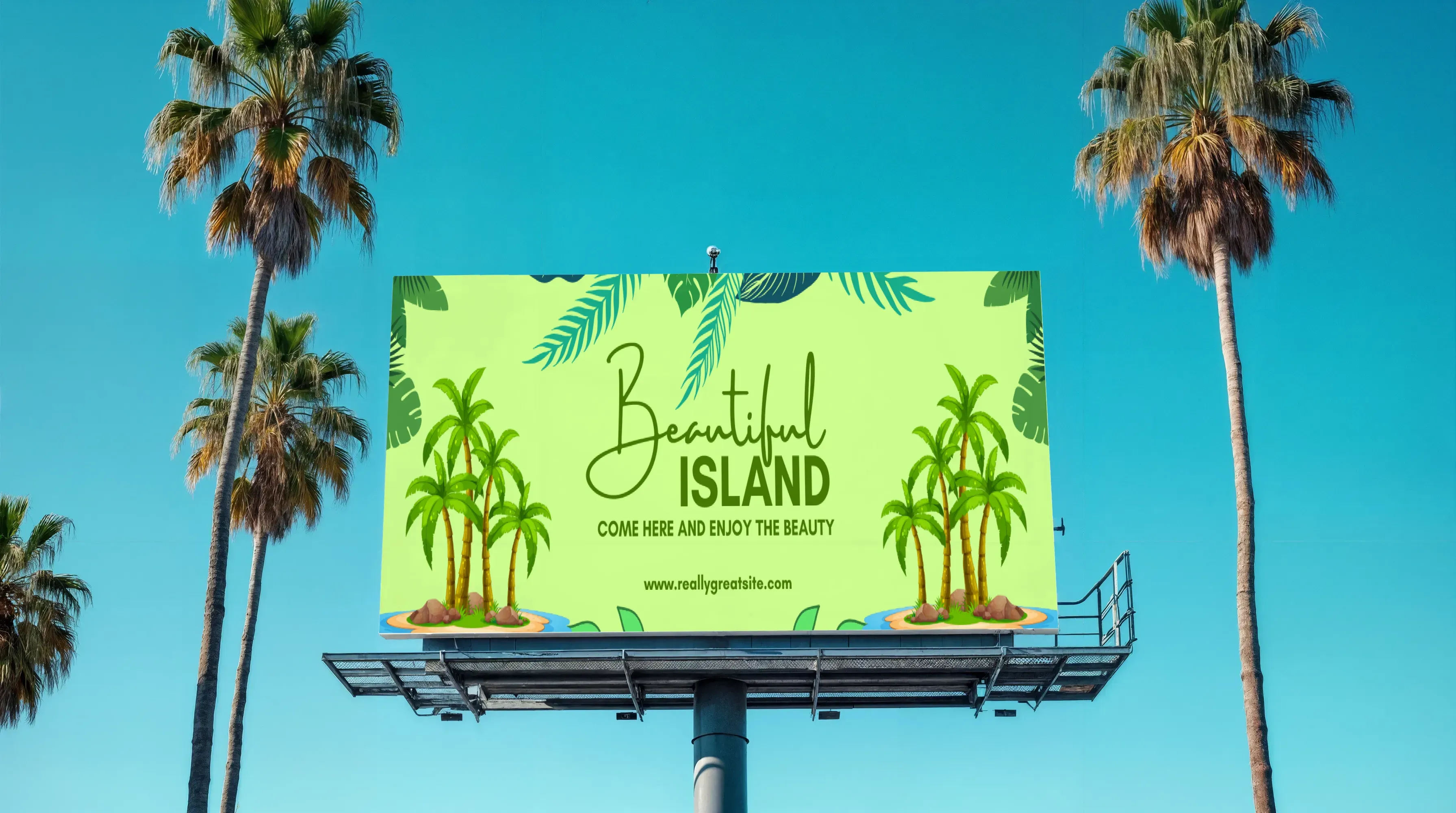
Billboard mockups are realistic digital presentations of your artwork on outdoor structures such as highways, bus stops, rooftops, or city streets. They simulate lighting, perspective, and scale to help you understand how well a design performs outside a design screen.
Why You Need Billboard Mockups
Before you start designing an outdoor campaign, it’s helpful to understand the value of billboard mockups. Below are key points explaining why billboard mockups should be a valuable asset for you.
Client Confidence: Billboard mockups let clients see their campaigns in real-world environments, making creative ideas more useful and increasing approval rates by providing a realistic visual reference.
Contextual Testing: Outdoor conditions are ever-changing; billboard mockups help you test the visibility of fonts, colors, and layout across different lighting, angles, and surroundings.
Error Prevention: Large-format printing can be expensive, and billboard mockups help catch spacing, scaling, and contrast mistakes early, reducing the risk of costly physical production errors.
Better Communication: Mockups serve as a shared visual guide for designers, marketers, and decision-makers, making feedback more precise and aligning expectations across every stage of the campaign.
Pitch Enhancement: High-quality billboard mockups make your presentations more compelling by showing exactly how the final installation will appear once approved.
Faster Revisions: Teams can quickly identify weak elements and refine artwork using mockup previews, speeding decision-making and creating a smoother, more efficient creative workflow.
Expert Tips to Create Compelling Billboard Mockups
Before finalizing your outdoor campaign, it’s advised to understand the principles of effective billboard mockups. Below are the essentials for creating billboard mockups:
Master the 3-Second Rule: Most viewers only see a billboard at a glance, so the message must hit instantly. Keeping visuals focused, using minimal text, and maintaining a structured design ensure the audience understands your idea in no time.
Apply the AIDA Framework: Start by capturing attention with a bold visual, then maintain interest with a short, catchy headline naturally leading to your CTA. This structure helps your billboard mockups feel intentional, clear, and easy to follow.
Prioritize Contrast and Color Psychology: Use high contrast to keep your message visible in all weather conditions. Use thoughtful colors to trigger emotions. For example, red and yellow together create a sense of hunger.
Leverage Big, Bold Typography: Large, heavy fonts ensure the message is readable even from a distance. Pairing bold text with appropriate spacing keeps the layout clean and helps your billboard mockups hold clarity.
Know How to Use White Space: White space gives your design breathing room and prevents visual clutter. It helps the viewer identify the key message instantly, making your billboard mockups balanced and easy to understand.
Embrace Seasonal and Contextual Billboards: Create variations for daytime, nighttime, and seasonal shifts to see how the design performs across different moments.
Leverage Dynamic DOOH Potential: Digital billboards can move or transition. Showing those sequences helps clients understand the whole experience, not just a single frame.
Geo-Targeted Relevance: Use location-specific phrases or visuals to create a more personal connection with the audience. These changes help your audience relate to your billboard.
The Psychological Edge: Sometimes an image communicates faster than any text. Strong visuals help your billboard design leave a more profound impression.
Top Tools to Create Billboard Mockups in 2025
Selecting the right mockup tool can affect the speed and quality of the output. Below are the most commonly used tools to create billboard mockups:
Modor
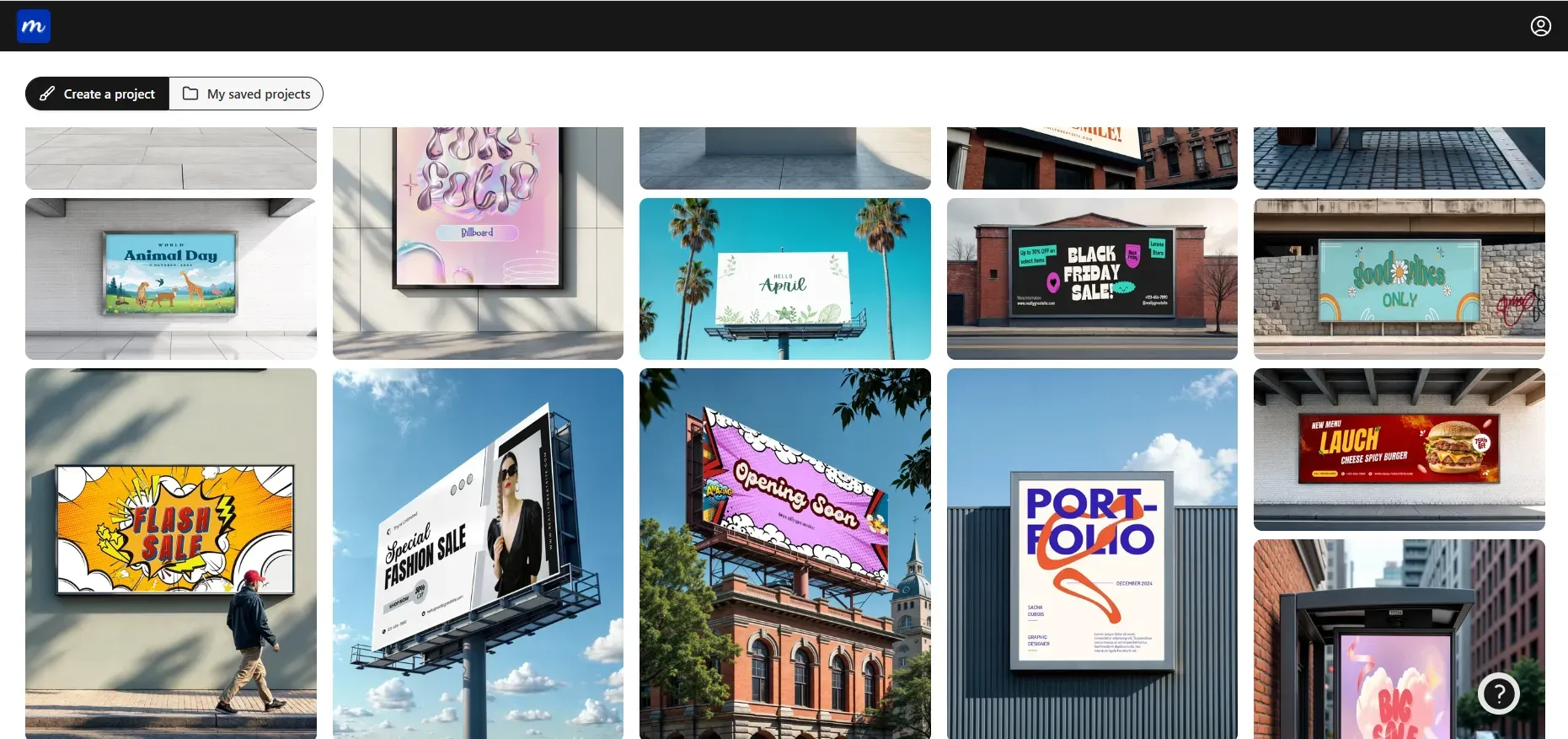
Modor keeps the process simple, which makes it refreshing for fast-moving projects. The templates, lighting, and drag-and-drop workflow help you build realistic billboard mockups even if you're not a technical designer. It’s quick, flexible, and ideal for people who need reliable mockups without unnecessary complexity.
Renderforest
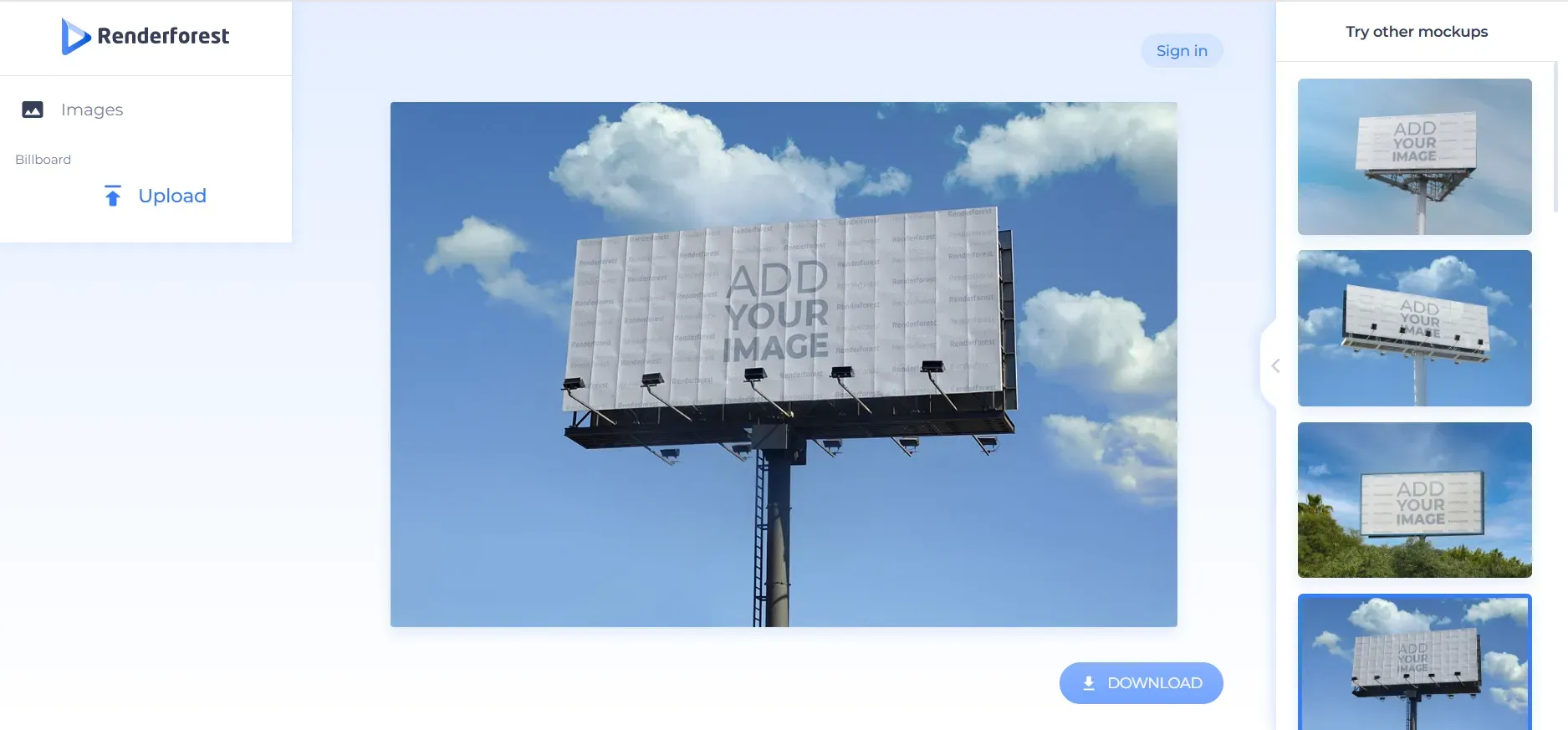
Renderforest provides billboard mockups as part of its broad design suite. It works well for basic mockups, but the library is small, and free exports often come with watermarks or lower resolution. Since the platform leans more toward video tools, it isn’t as specialized for billboard design needs.
Adobe Photoshop
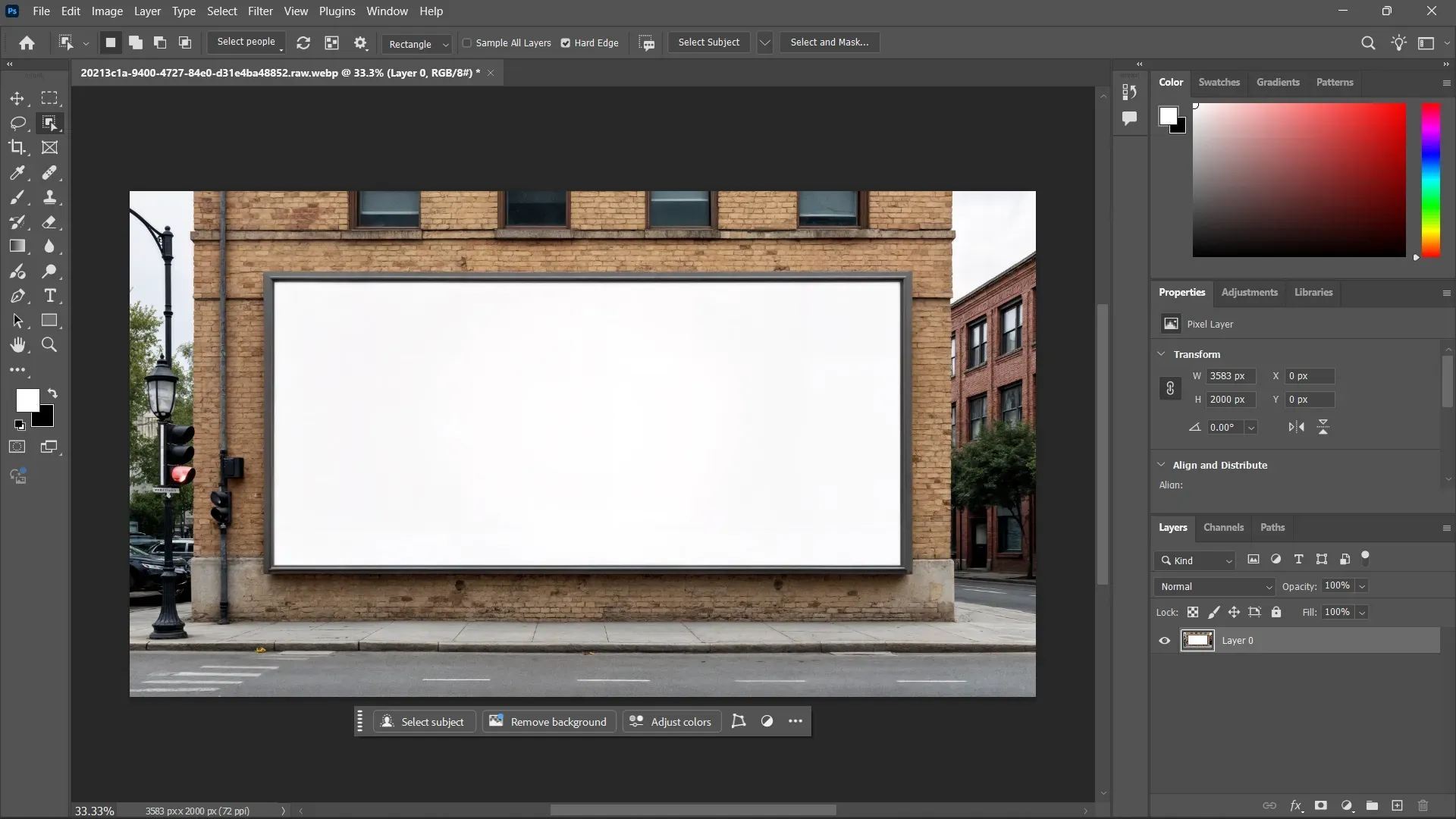
Photoshop is the expert’s choice for designers, offering complete editing control over PSD mockups. While it’s the most sought-after option, it requires more skill, time, and a paid subscription. For quick billboard mockups, it can feel heavier than it needs to be.
Mediamodifier
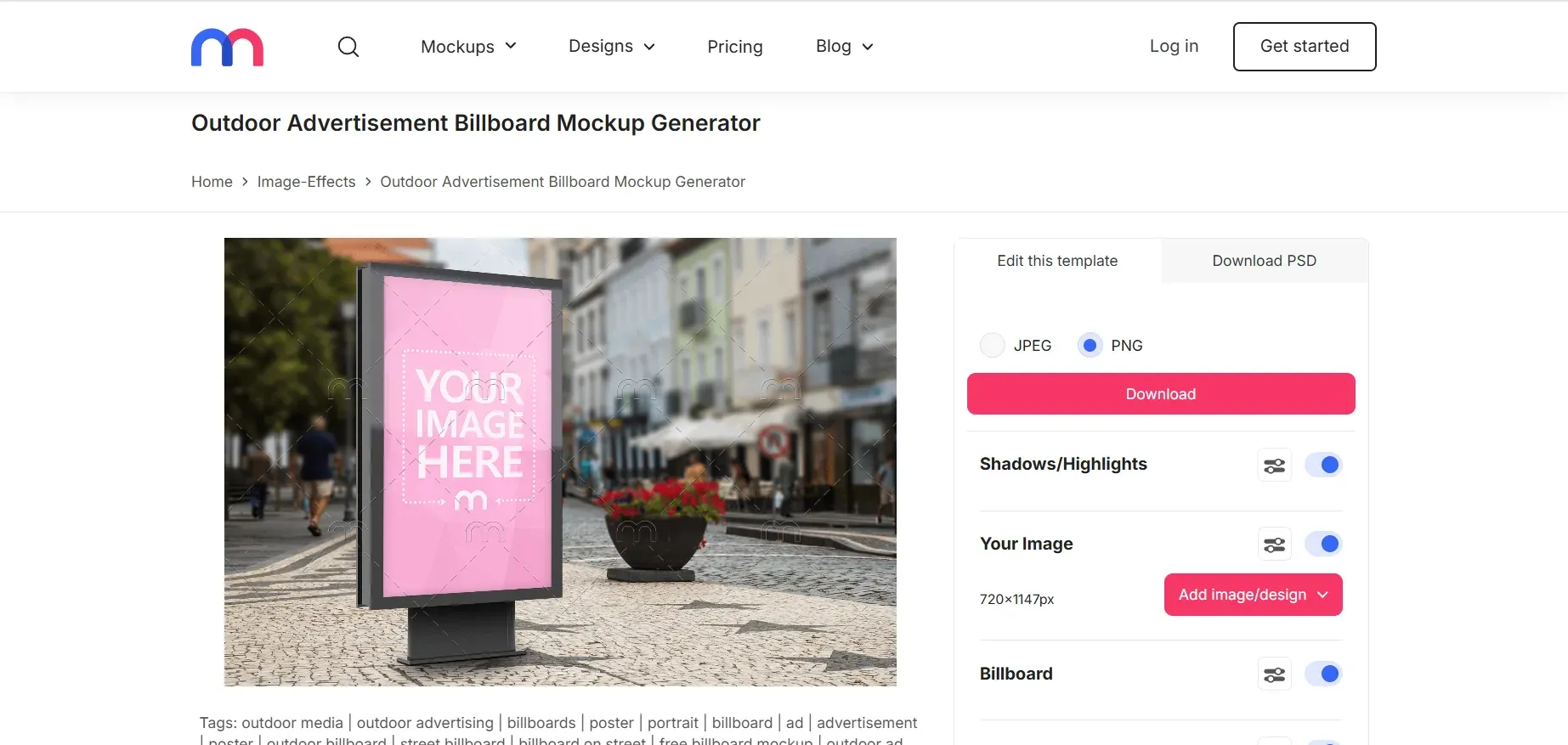
Mediamodifier provides ready-made templates that work well for simple outdoor previews. A few limitations are watermarked downloads, lower-resolution templates, and fewer editing controls. It’s ideal for simple billboard mockups, not a high-end portfolio.
Create Billboard Mockups with Modor in 5 Simple Steps
Start with a clear, high-resolution PNG or JPG, as outdoor formats need to be highly detailed. Matching your design to the billboard’s aspect ratio helps the mockup feel natural.
Gathering your brand fonts, colors, and visual elements in advance also helps in keeping the entire set of billboard mockups visually consistent.
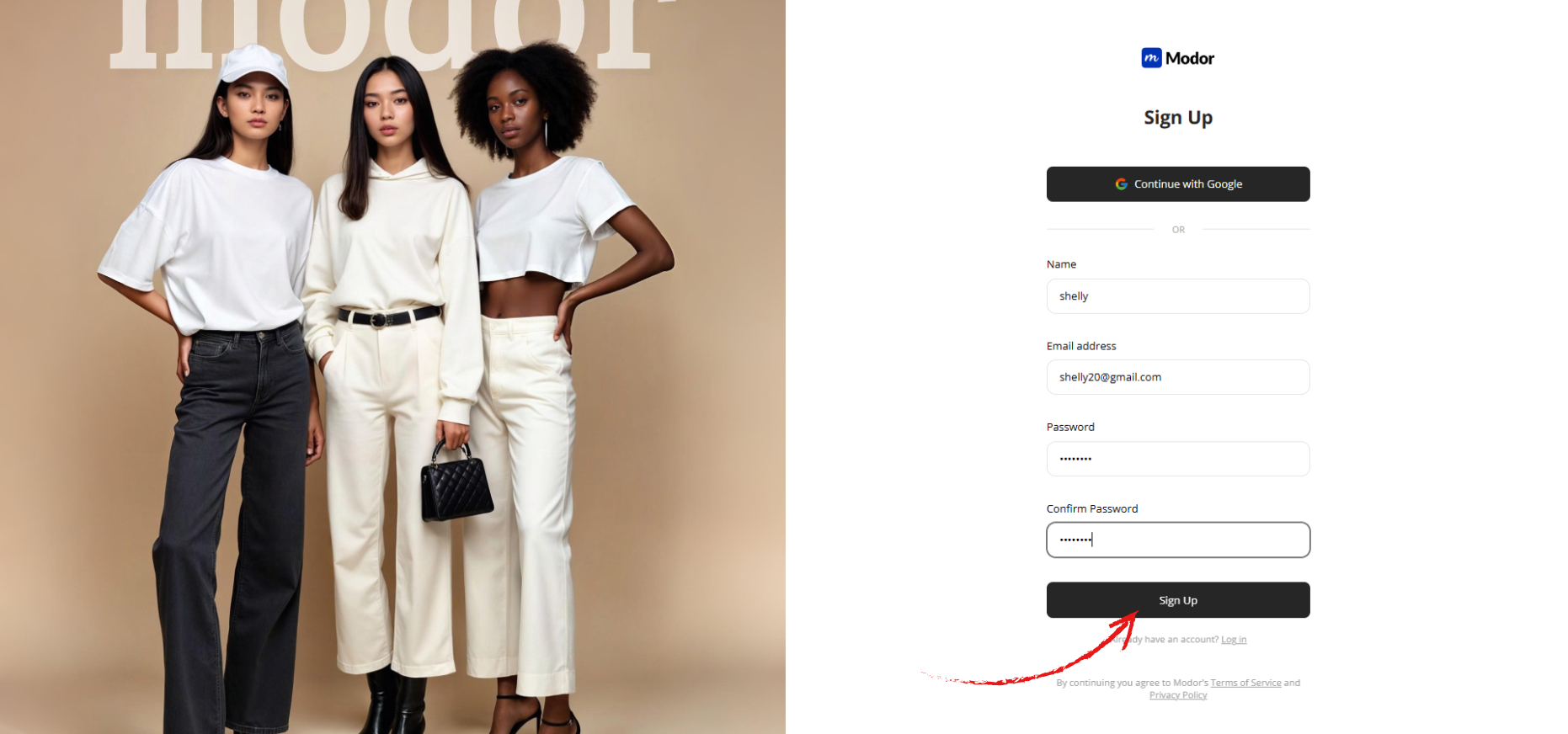
Step 1: Sign up on Modor.io using your Google or email account. If you already have an account on Modor, simply log in with your login credentials and access your dashboard to start creating billboard mockups.
Step 2: Browse through billboard mockups featuring highways, rooftops, night scenes, or city streets. You can filter further by orientation (vertical or horizontal) or layout (multiple).
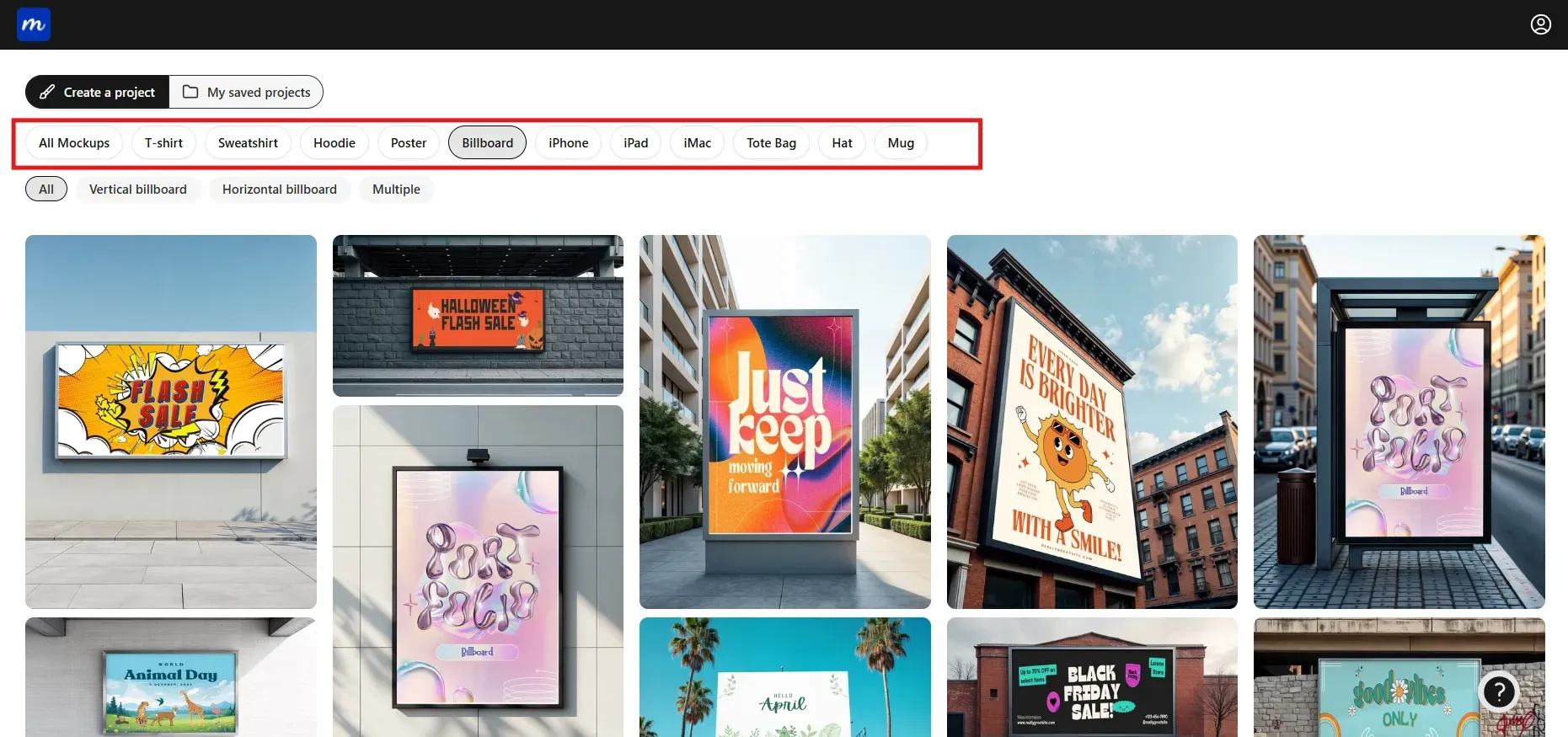
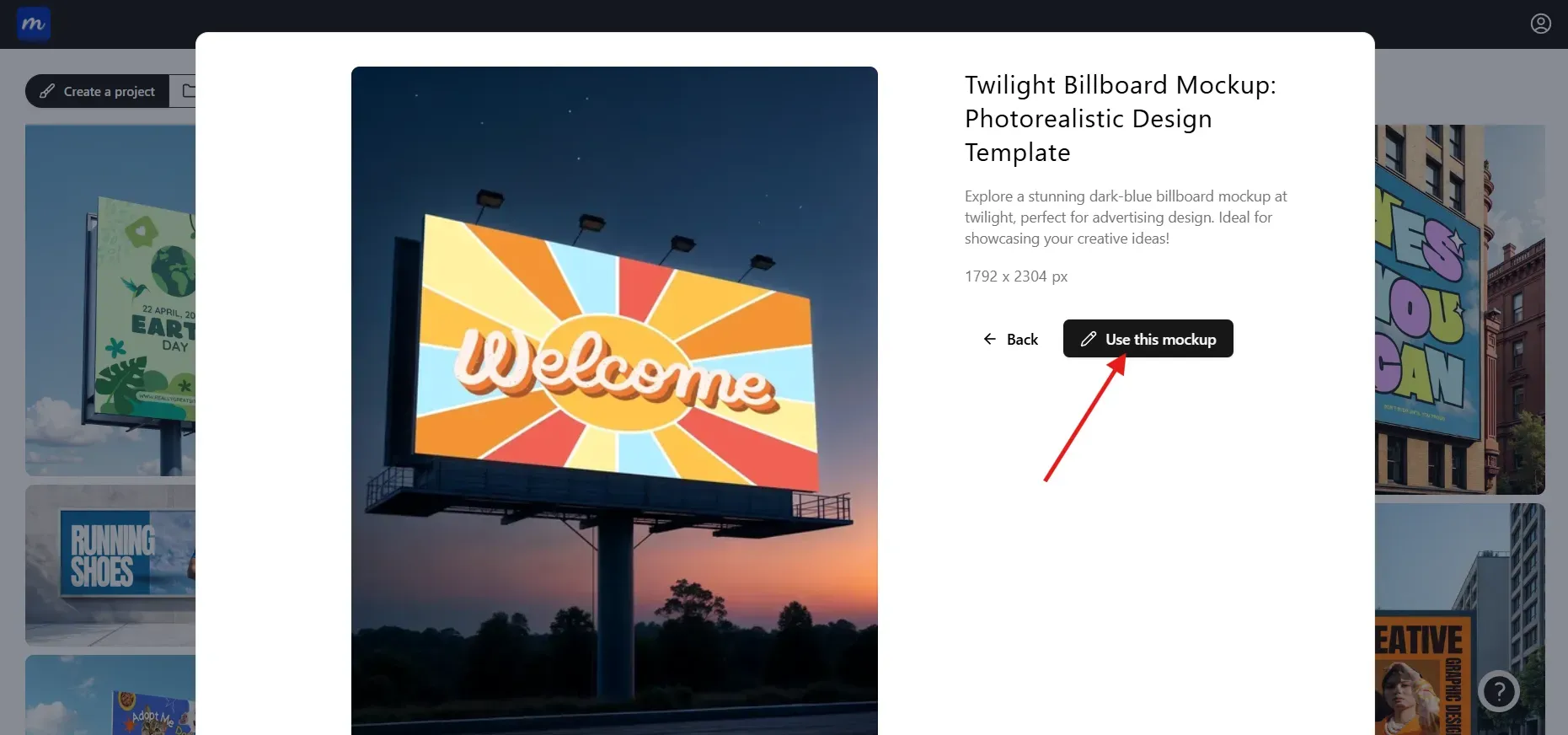
Step 3: Click Use this mockup to load the selected template and start editing your billboard mockup inside the editor.
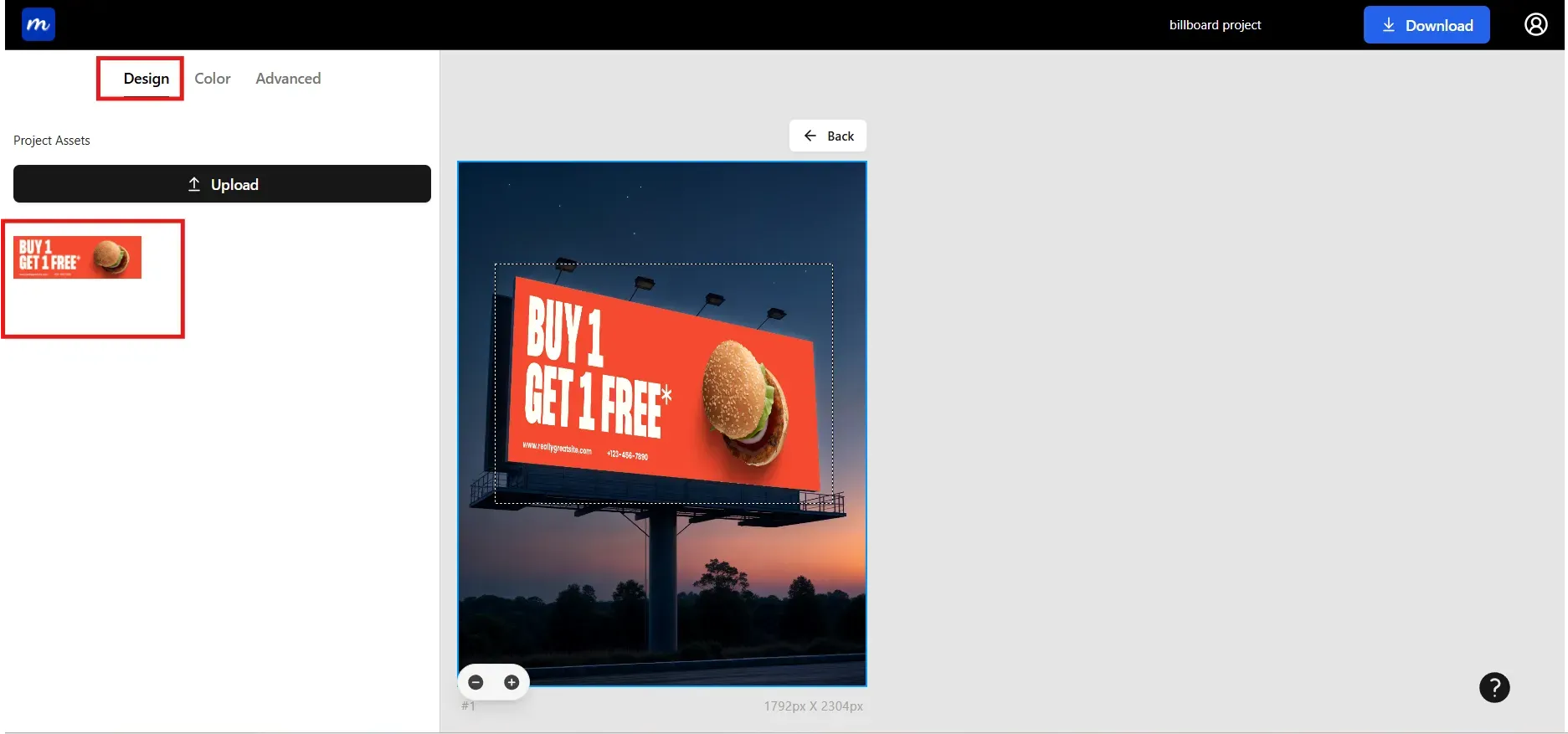
Step 4: Upload your PNG design and place it directly onto the billboard area. Transparent PNGs blend more easily, especially on angled or complex boards. Adjust position, size, and rotate until your design fits naturally within the mockup.
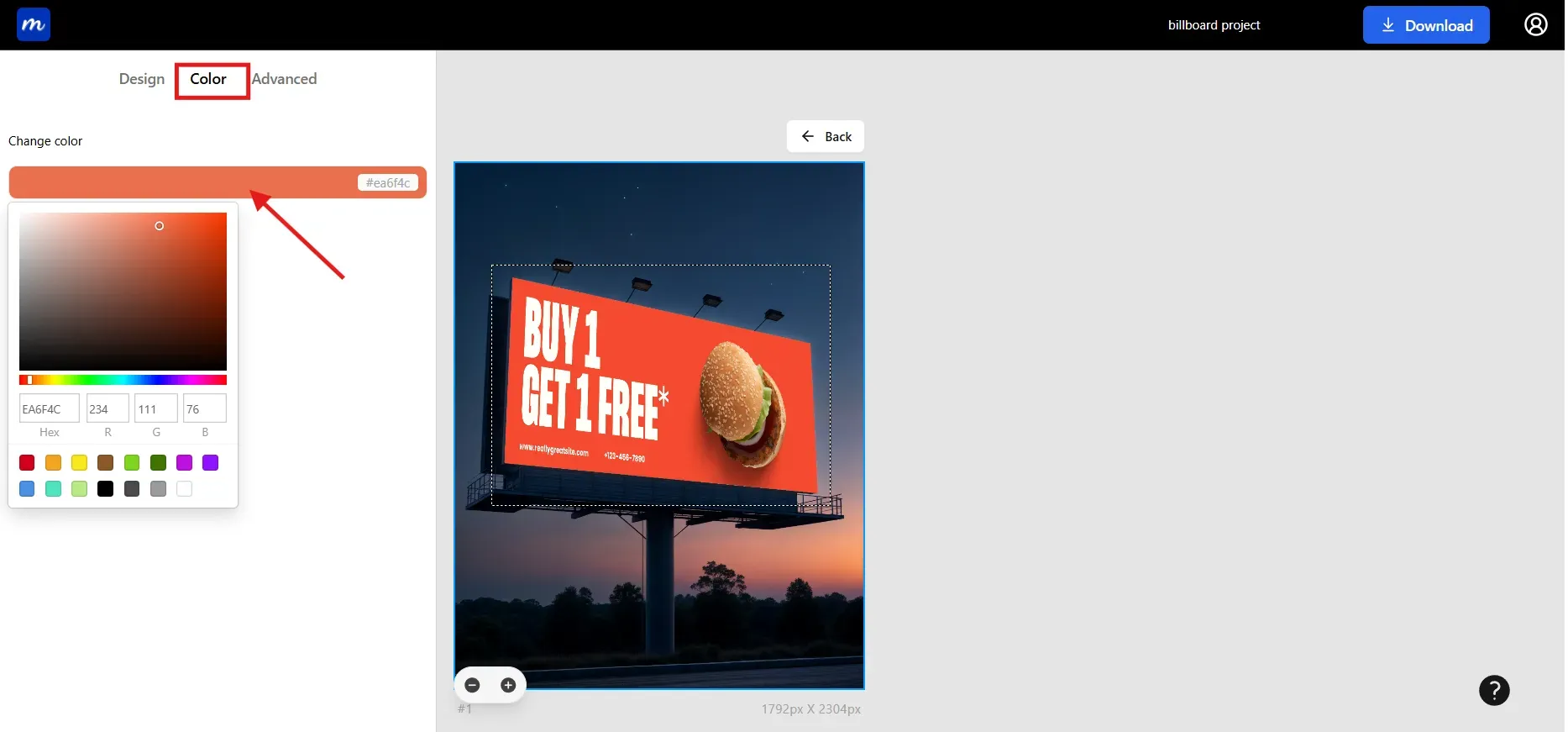
Step 5: Change the color of your billboard by using the color picker, inserting a hex code, or RGB values. Use transform X and Y to position your design perfectly over the billboard mockup.
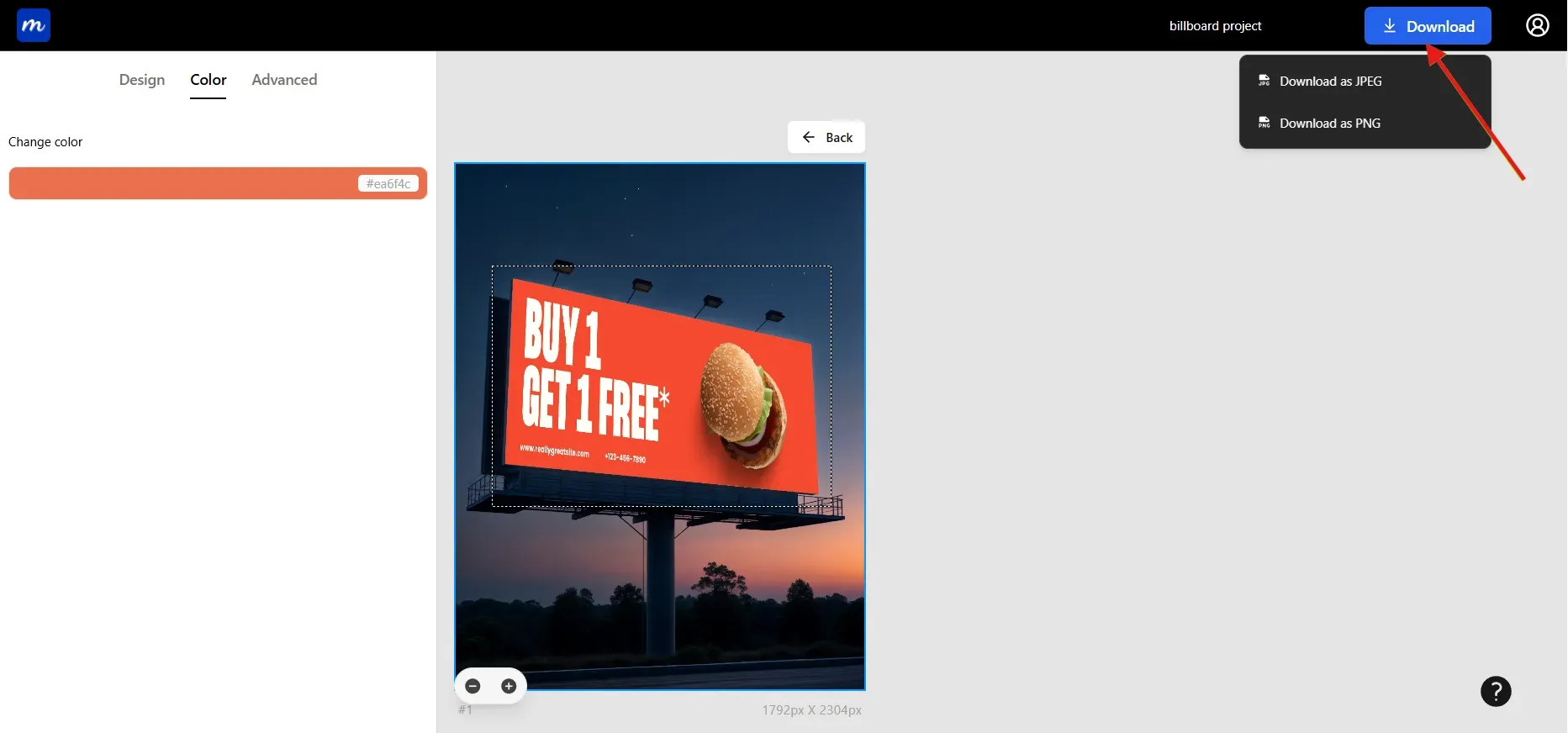
Step 7: After all edits, download your billboard mockup. Choose PNG or JPG format. PNG delivers sharper detail, while JPG works well for lightweight sharing. Always export at high resolution to maintain quality across all screen sizes.
Common Mistakes to Avoid While Creating Billboard Mockups
Before finalizing your billboard mockups, understand the most common mistakes to avoid them.
Low-Resolution design: A blurred or pixelated design is noticed immediately, especially when scaled across a large mockup. High-resolution files keep your billboard design sharp and maintain professionalism in your presentation.
Ignoring Perspective: Placing the design on an angled billboard without adjusting the angles makes it look unrealistic. Use designs that match your board’s structure to help your billboard mockups blend naturally with the environment.
Visual Clutter: Too many elements in a single mockup can look messy and disorganized. Viewers don’t have time to decode complexity, so simplifying your billboard design makes it far more effective.
Poor Contrast: Weak contrast causes fonts and visuals to disappear under strong sunlight or in the dark. Testing high-contrast combinations protects readability in all outdoor situations.
Top 10 Billboard Mockups Trends in 2025
Outdoor advertising continues to evolve with new ideas and strategies. Below are the leading trends shaping how brands create billboard mockups today, along with use cases that show where each one performs best.
1. Urban Street-Level Billboards
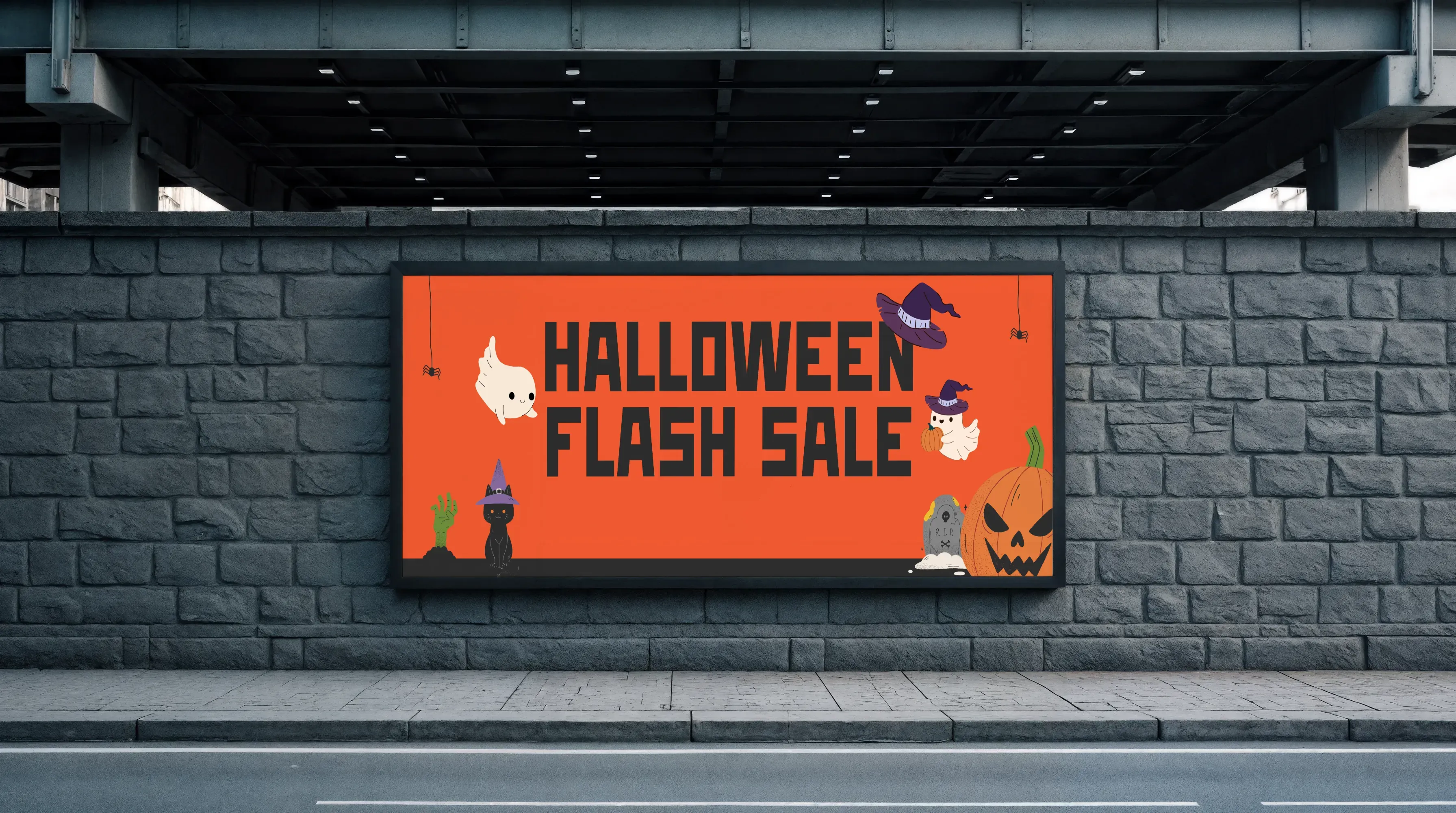
Placed at eye level for pedestrians, these boards allow for more detail because viewers stand closer. These are Ideal for promoting local events, store launches, community services, or neighborhood campaigns.
2. Highway Mega Billboards
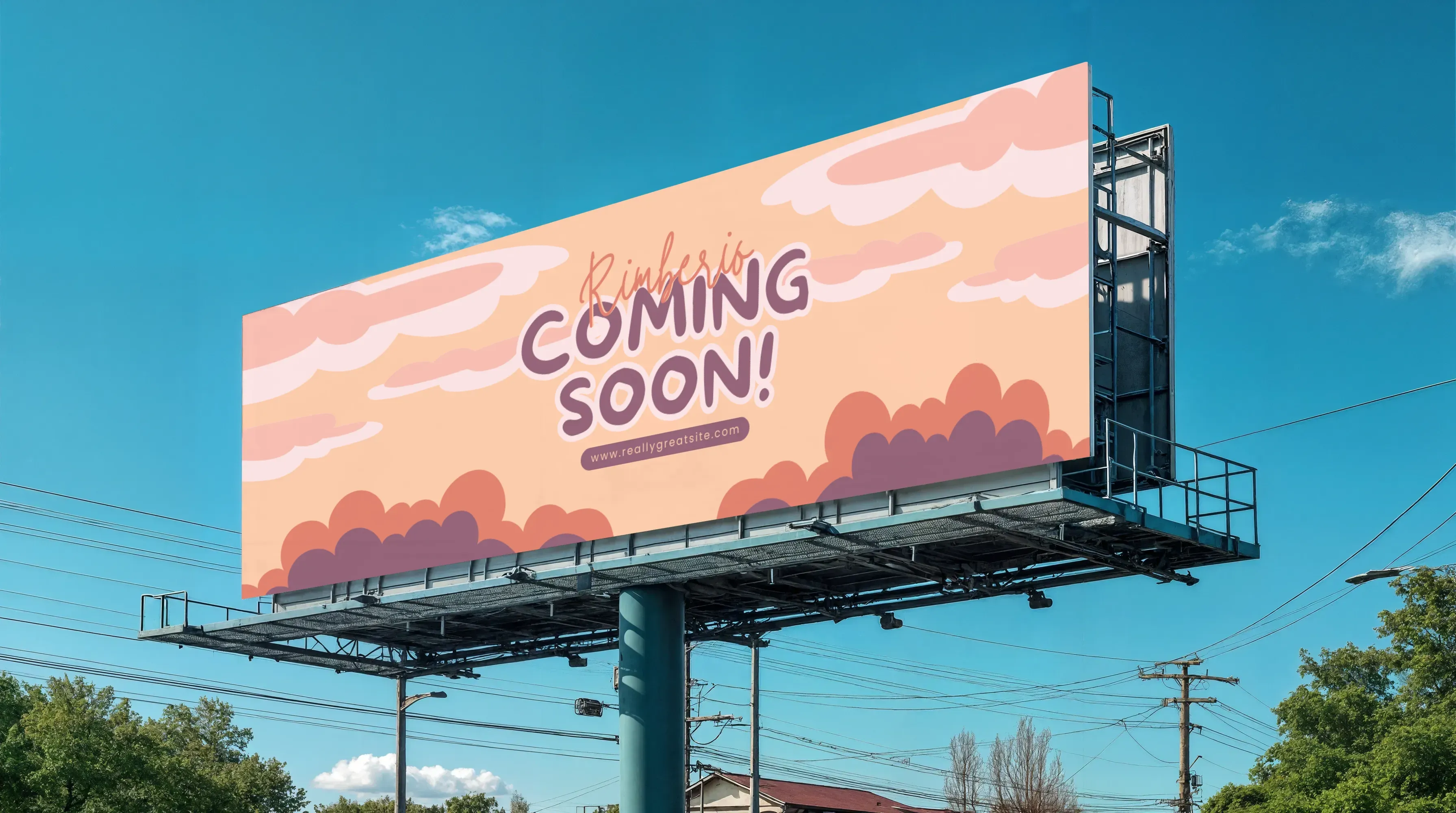
Designed for fast-moving traffic, these mockups go well with bold visuals and short text. These are ideal for branding campaigns, short slogans, or high-impact visuals meant to be recognized from a distance.
3. Famous Building Billboards
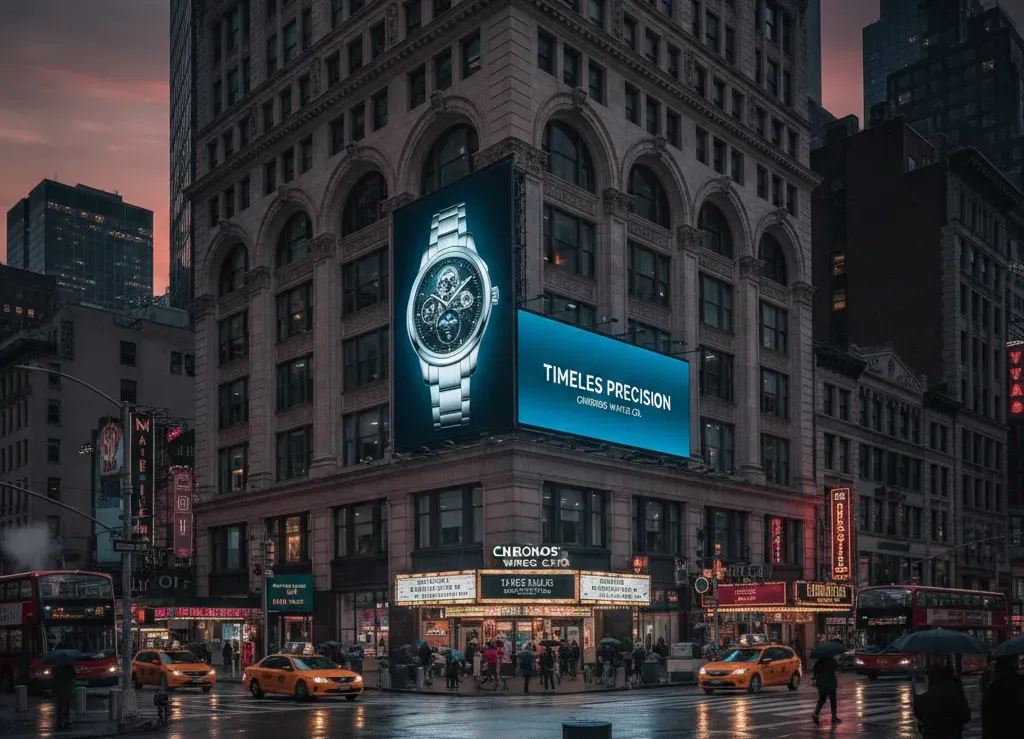
These giant digital screens dominate high-traffic tourist zones with motion and brightness. Perfect for new product launches, entertainment promotions, or major campaigns that need attention at scale.
4. Building Wall Wrap Billboards
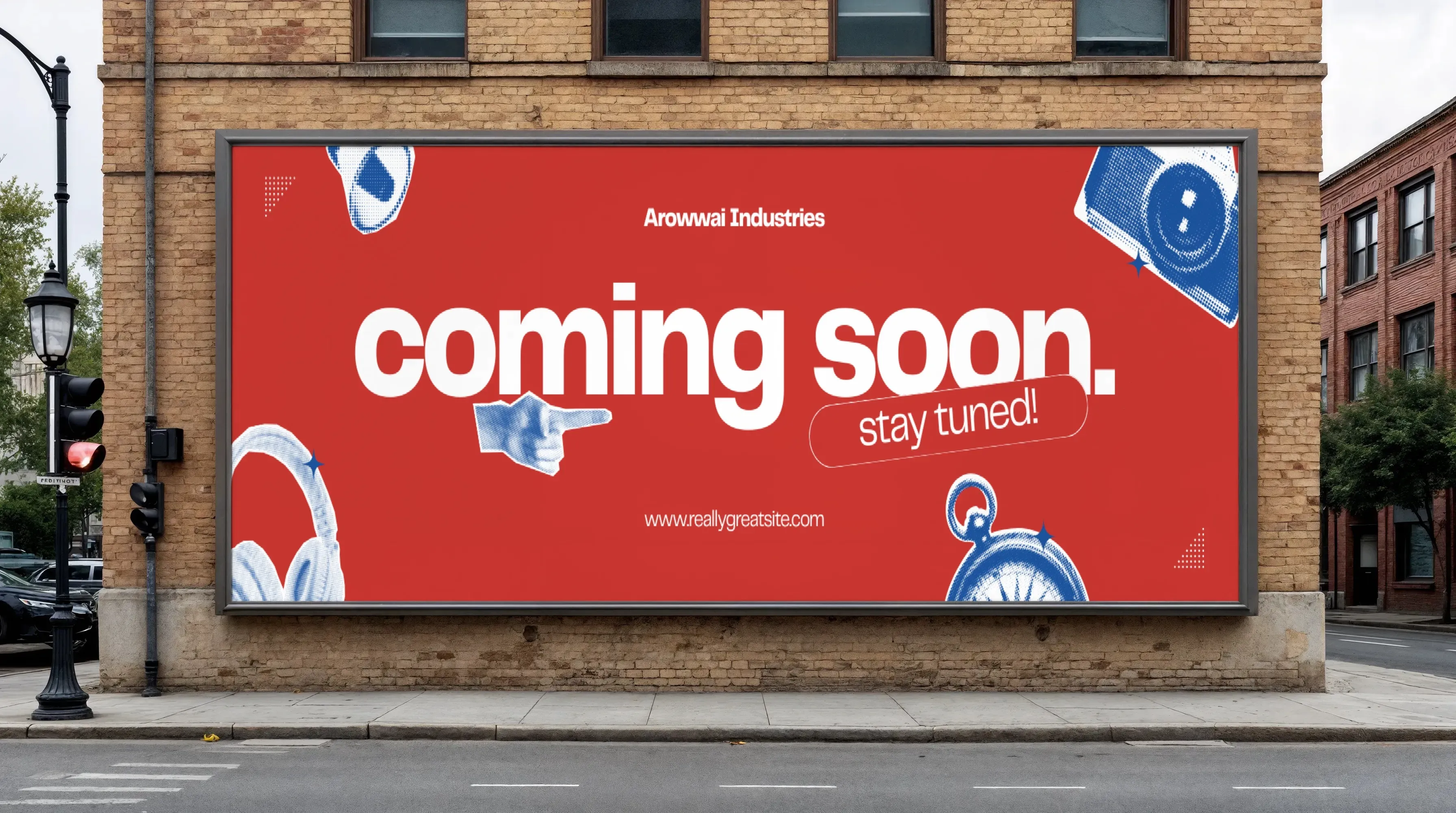
These mockups wrap around entire building facades, making a dramatic impression. Wall wrap billboards are great for long-term branding, artistic storytelling, and concepts that rely on immersive visuals.
5. Bus Stop Shelter Billboards
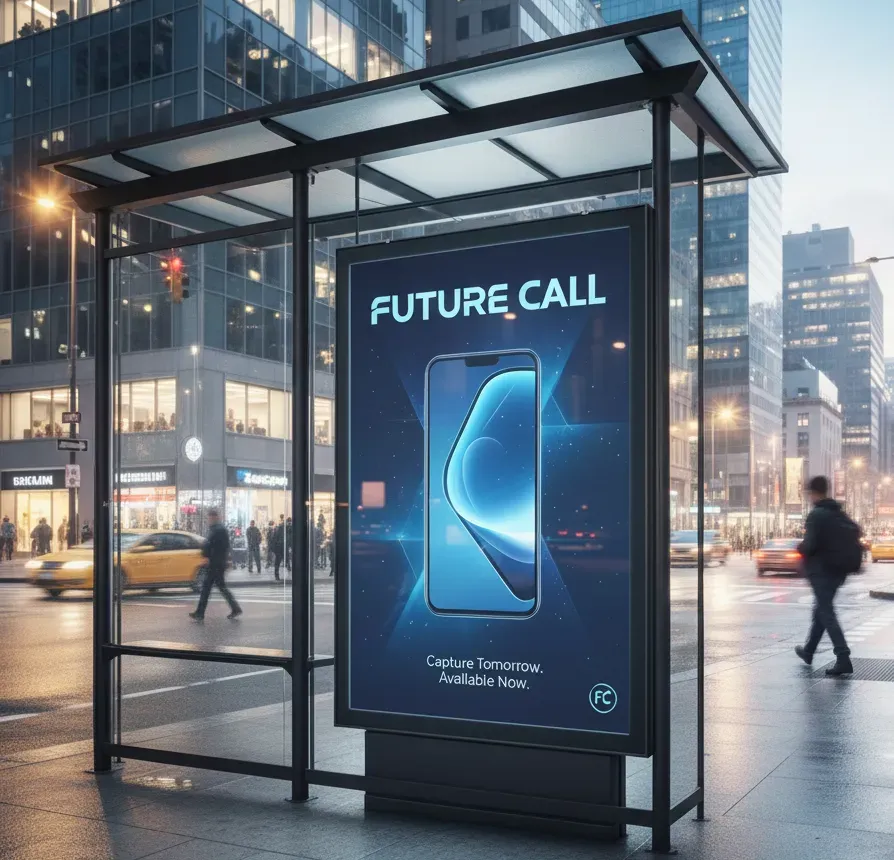
These mockups are intentionally used at bus stops because that’s where people are waiting; these boards can handle more written detail. Perfect for QR codes, app promotions, instructions, or informational ads that need a few extra seconds of attention.
6. Subway and Metro Tunnel Billboards
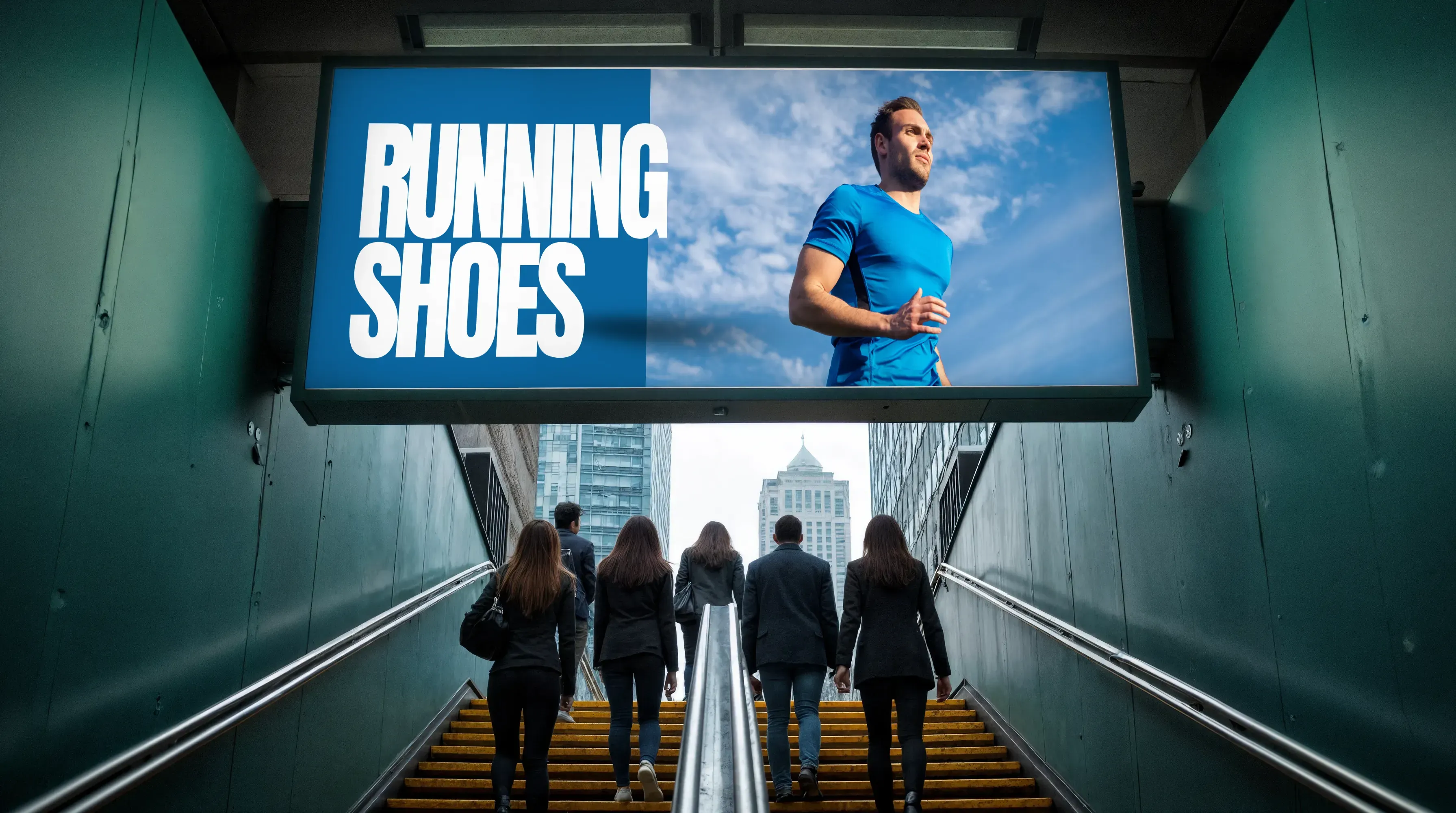
These billboards are used in subway or tunnel areas to catch passengers’ attention. Works well for reveal-style campaigns, educational content, or product stories broken into phases.
7. Nighttime Street Billboards
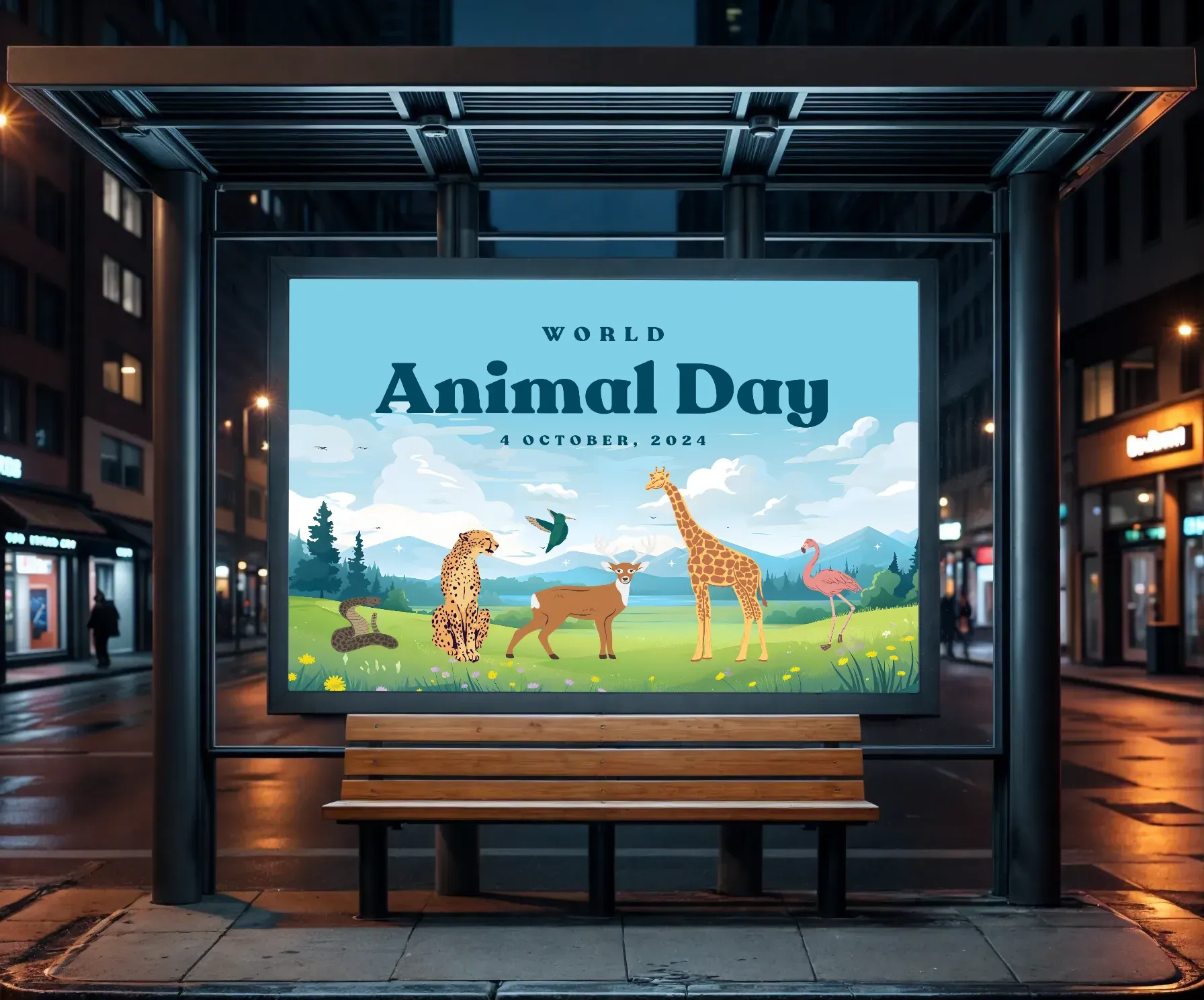
These billboards are used as bright illuminated panels on a dark street. Best for nightlife brands, entertainment venues, or campaigns targeting evening crowds.
8. Rooftop Billboards
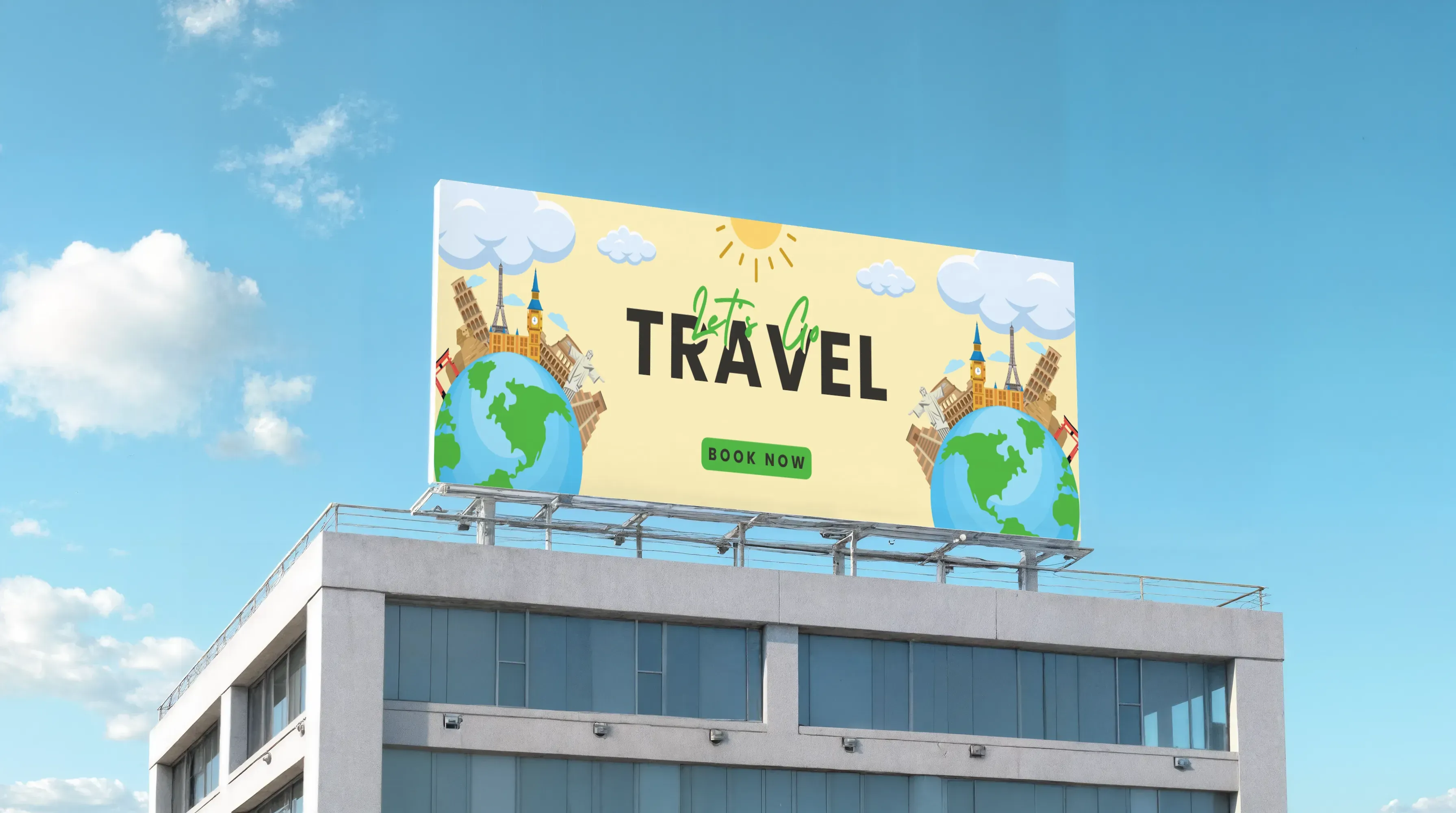
Visible across long distances, rooftop boards reward simple, striking branding. Perfect for strong logos, short identity messages, and high-visibility awareness campaigns.
9. Minimal Studio Billboards
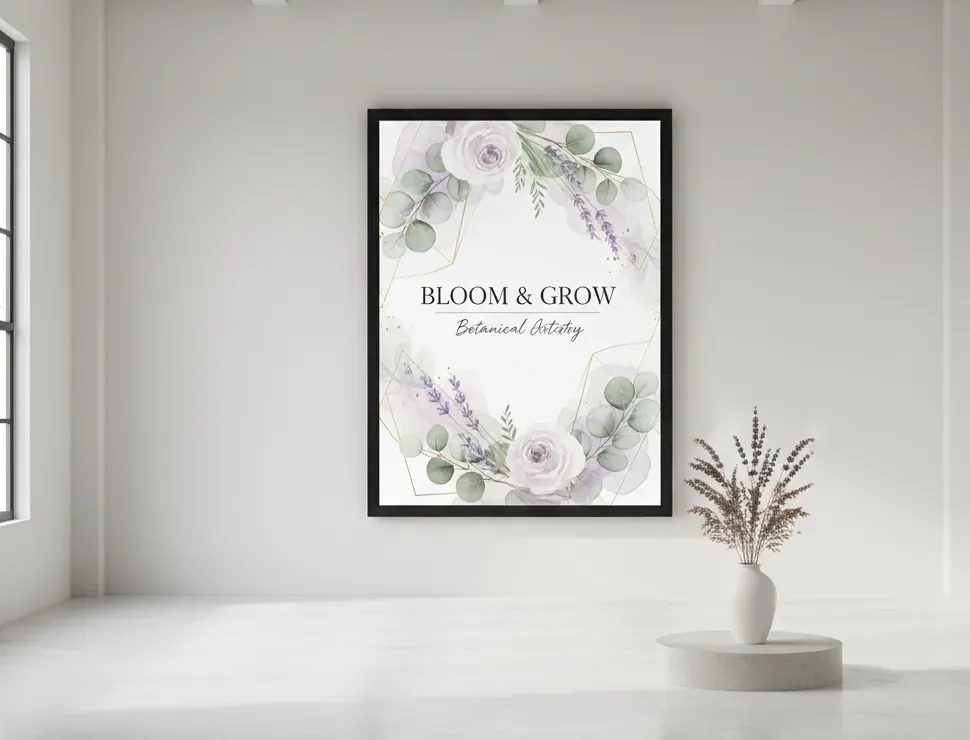
These clean, distraction-free mockups show the design without outdoor noise. Great for portfolios, client approvals, or social media showcases.
10. Outside Cafe Billboards
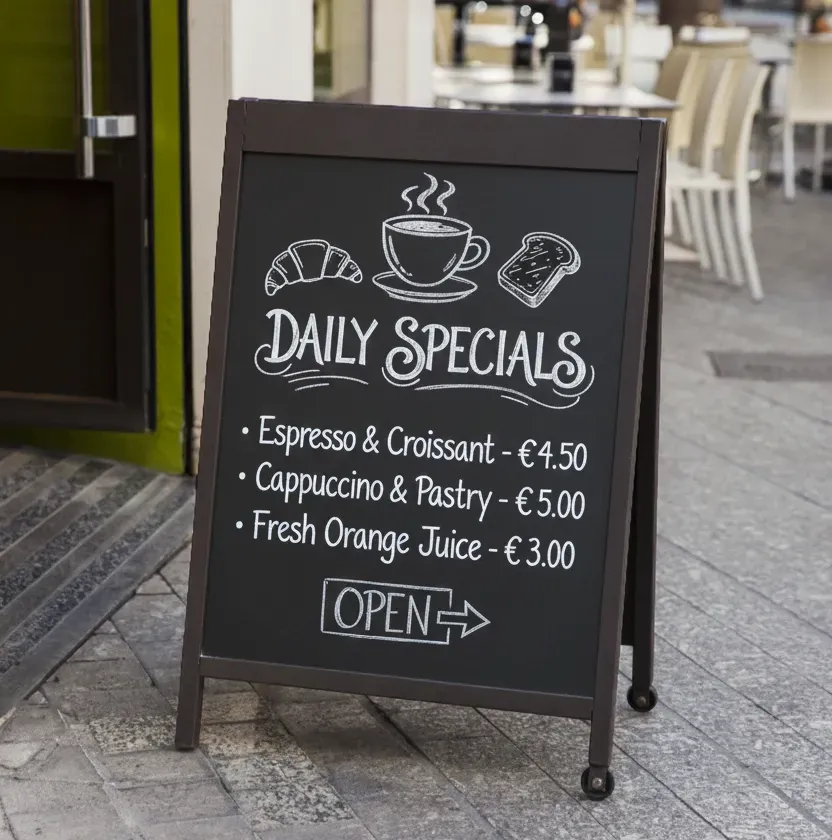
Compact and easy to notice at close distance, these boards speak to foot traffic. Ideal for daily specials, local event announcements, or small business promotions.
Final Thoughts
Billboard mockups have become a reliable asset in outdoor advertising, helping you test clarity, refine hierarchy, and avoid costly mistakes before printing. They bridge the gap between a designer’s screen and the real world. When you see your billboard design placed in a realistic scene, it becomes easier to judge whether it will communicate with viewers.
With Modor simplifying mockup creation, the entire process feels more approachable. Modor makes it easy to preview ideas, experiment with variations, and present polished billboard mockups without technical friction.
Whether you're pitching to clients or fine-tuning a complex campaign, creating these previews gives you a more straightforward path to stronger outdoor advertising.
FAQs
1. How to make a billboard mockup?
You can quickly create billboard mockups with a web app like Modor. Choose a template, upload your design, customize your mockup, and download it in high resolution for presentations or client use.
2. What is the 3-second rule for a billboard mockup?
The 3-second rule means that people should understand your message within three seconds, ensuring your billboard mockups communicate clearly to fast-moving traffic and passing audiences.
3. Can I create a billboard mockup in Photoshop?
Yes, Photoshop allows detailed editing with Smart Objects, but it takes more time and expertise than faster online billboard mockup tools.
4. Where to use billboard mockups?
Billboard mockups are mainly used in client pitches, marketing decks, portfolio displays, internal strategy reviews, and social media showcases where outdoor concepts need a realistic presentation.
5. What are some real-life successful billboard cases?
Some real-life, successful billboard ads include Brands like Nike and GetYourGuide, which have used powerful billboard visuals to create memorable moments, proving how impactful outdoor advertising can be when executed with strong creative direction
Related Blog