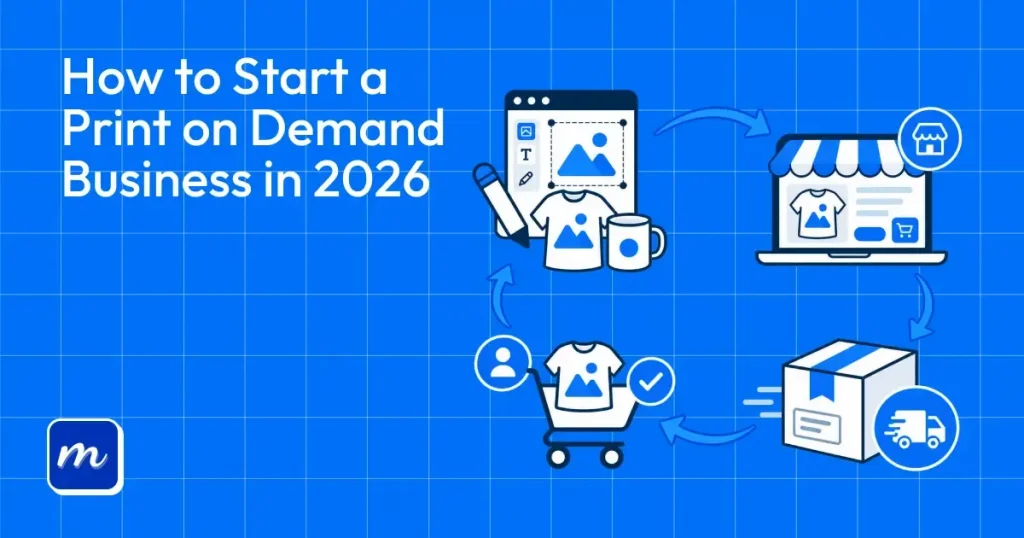
If you are looking for how to start a print-on-demand business, the process involves choosing a specific niche, creating compelling designs, creating product mockups, and selecting a POD supplier who will handle printing and shipping only when a customer makes a purchase.
This business model removes all the risks associated with a traditional business, and in today’s blog, we will give you a step-by-step guide on how to start a print-on-demand business, tools you can use, and everything you need to succeed in the business.
Key Insights
Starting a print-on-demand business is more accessible than ever because you don’t need to manage inventory, manufacturing, or upfront production costs.
Print-on-demand lets you focus on designing products and growing your brand while suppliers handle printing, fulfillment, and shipping.
Choosing the right niche and validating product demand are among the most important steps when learning to start a print-on-demand business.
Products like t-shirts, hoodies, sweatshirts, and mugs remain some of the most profitable options for new print-on-demand businesses.
Strong product designs play a major role in helping print-on-demand businesses stand out in an increasingly competitive ecommerce market.
Choosing reliable suppliers like Printful, Printify, and Gelato directly impacts product quality, shipping speed, and customer satisfaction.
Use Modor to create professional product mockups, as they are critical for building trust, showcasing products effectively, and increasing conversion rates.
Modor simplifies POD mockup creation, offering an easy-to-use editor, 10,000+ mockup templates across 25+ categories, bulk mockup creation, high-resolution exports without watermarks, and a commercial license.
What is a Print-on-Demand Business?
A print-on-demand business is an e-commerce model in which you sell customized, white-label products such as t-shirts, mugs, or posters without holding physical inventory.
Unlike traditional businesses that require managing inventory, production, shipping, and raw materials, a print-on-demand business lets you focus only on creating designs and marketing.
Your POD supplier handles printing, fulfillment, and delivery, while products are made only after a customer places an order, allowing you to earn profit from the price difference.
Pros and Cons of Print on Demand Business
Before diving into the step-by-step process of how to start a print-on-demand business, let’s first learn the pros and cons of a print-on-demand business.
Pros of Print on Demand
No inventory required: One of the biggest advantages of the print-on-demand business model is that you don’t need to manage inventory. Your print-on-demand provider handles product printing, inventory management, order fulfillment, and shipping on your behalf.
Low barrier to entry: With print-on-demand, you don’t need to be a good designer or have a lot of money and business experience. Anyone can get started with minimal investment, making it easy for anyone to start their own business.
Ship worldwide: Another major advantage of print-on-demand is the ability to sell products globally. If your supplier offers international shipping, customers worldwide can place orders, allowing you to reach a larger market and increase your revenue potential.
Complete control over your business: In the print-on-demand business model, you have complete creative control of your business, which means you can choose what to sell, what designs to create, and how your final products should look and feel.
Cons of Print on Demand
Inconsistent quality and shipping speed: Some POD suppliers use different printers across regions, resulting in inconsistent print quality and shipping speed.
Customer support: Although you are not involved in the shipping process, you will be responsible for handling customer feedback, questions, and returns.
Changing product margins: Not all products offer the same profit margins, and margins can be affected by factors such as shipping location, quality, and more. All these will directly impact your business.
High competition: Since the barrier to market entry is low, many people take a chance and start a print-on-demand business, making it difficult to stand out in a crowded market. That’s why you need good designs and a good mockup tool, so your product can look unique.
Why Print on Demand is Still Profitable in 2026?
Before you learn how to start a print-on-demand business, it’s crucial to learn why the print-on-demand business model is still profitable in 2026.
Low startup costs: You don’t need to invest in inventory, equipment, or storage space, making it easier to start a business with minimal upfront investment.
Growing e-commerce market: More consumers are shopping online than ever before, creating opportunities for niche print-on-demand businesses.
Access to global customers: Many POD suppliers offer worldwide fulfillment, enabling you to sell products to customers worldwide.
Easy product testing: You can launch new designs quickly and test different niches without making a large financial commitment.
Personalized products command higher prices: Custom and personalized products often have higher perceived value, allowing you to increase profit margins.
Scalable business model: As sales increase, your supplier handles production and fulfillment, making it easier to grow without hiring additional staff.
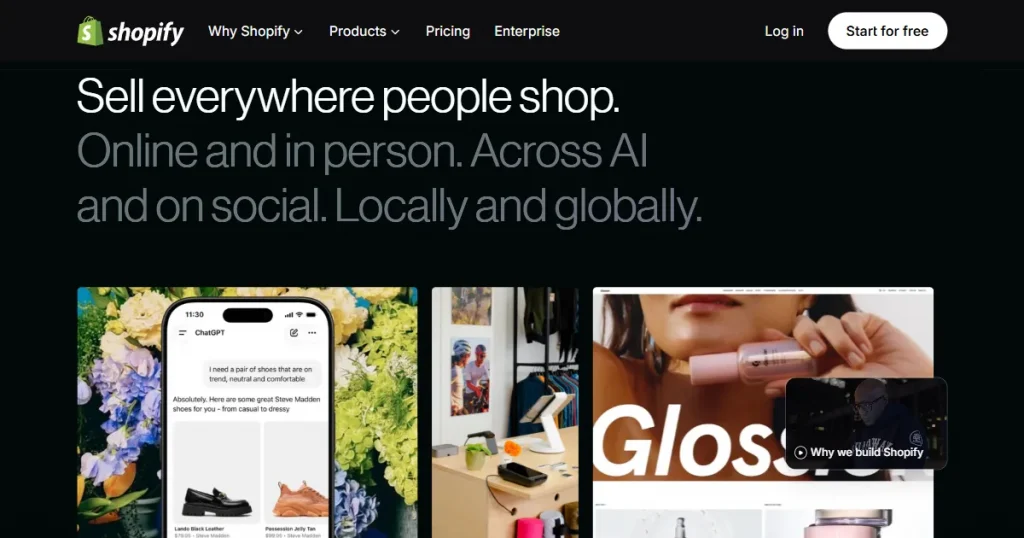
Multiple sales channels: Once you learn how to start a print-on-demand business in 2026, you can sell through marketplaces like Etsy, Shopify, your own website, social media platforms, and other e-commerce channels simultaneously.
Step-by-Step Process to Start a Print-on-Demand Business in 2026
If you want to learn how to start a print-on-demand business in 2026, follow the steps below.
1. Choose a Profitable Niche
Instead of trying to sell to everyone, focus on a niche and create products tailored to a specific group of people with shared traits, hobbies, or interests. This allows you to create designs that resonate with that audience and generate consistent sales.
If you want to learn how to start a print-on-demand business, you need to first find a profitable niche, and here are a few ways you can find profitable print-on-demand ideas.
Browse social media: If you browse Instagram and other social media, you’ll notice ads for popular products, and if those products keep appearing, it usually means there is strong demand in the market.
Amazon and Etsy marketplaces: E-commerce marketplaces like Amazon and Etsy are the first place where you will find the upcoming trends, as sellers on these platforms are always on the lookout for new trending ideas. You can follow their lead to find profitable print-on-demand ideas.
Use Google Trends: You can also use Google Trends to see which keywords are trending right now and analyze why they are trending to find the popular niches that you can target.
2. Choose the Right Product to Sell
Once you have decided on a niche and target audience, the next step in learning how to successfully start a print-on-demand business is choosing the right product with proven market demand rather than relying solely on personal preferences.
A good print-on-demand product idea should fit these criteria.
Should have high sales volume: You can use tools like Everbee to find print-on-demand ideas that are bestsellers in marketplaces like Etsy, Amazon, and TikTok Shops. And focus on products with high sales volume, which indicates consistent demand.
Evergreen products: Next, focus on products that will always be in high demand, regardless of design. A good example of this kind of product is the T-shirt, which will always be in demand regardless of the design.
Healthy profit margins: Always choose products with high profit margins, at least 30%, as this will allow you to actually make a profit. Products like stickers have high sales volume and are evergreen, but they don’t have high profit margins.
During our research on how to start a print-on-demand business, we found that only four products consistently meet these criteria, and they are T-shirts, Hoodies, Sweatshirts, and Mugs.
3. Create Designs for Your Product
After identifying a profitable niche and selecting your items, the next phase in launching a print-on-demand venture is to develop compelling designs, as these visual elements serve as the initial point of engagement for potential buyers.
So, keep these things in mind when creating designs for your products.
Analyze, don’t copy: Most people learn how to start a print-on-demand business but fail at it because they copy an already trending design that worked for some other POD seller. However, the right approach is to study why this design worked for them and reverse engineer it to create unique designs for your brand.
Create minimalist designs: Simple designs work better than cluttered ones because they offer clear messaging, strong visuals, and easy-to-read typography that customers can relate to.
Niche-tailored designs: Create designs using niche-specific memes, jokes, or ideas, as these are more likely to go viral. So, think about your target audience’s interests and create something they can relate to.
4. Select a Print on Demand Supplier
A major part of learning how to start a print-on-demand business is choosing the right POD supplier, which directly impacts your store’s success.
Print-on-demand suppliers handle printing, packaging, and shipping your products, which affects your sales volume, whether customers will return for more, and whether you will need to issue refunds.
Here are a few popular print-on-demand business platforms you can choose from.
Printful: Anyone who has ever searched for how to start a print-on-demand business must have found Printful, as it is the market leader for print-on-demand business platforms because of its large product catalog, better product quality, and in-house fulfillment.
Printify: Printify is another name that every person who searched for how to start a print-on-demand business must have heard about, as it allows you to choose from a bunch of print providers based on the quality, profit margins, and shipping goals you’re targeting.
Gelato: Another print-on-demand business platform known for worldwide shipping and fast delivery. They have a network of over 140 print providers across 32 countries, making it easy for them to ship products fast anywhere.
Also, here are a few things you need to remember to choose the right print-on-demand business platform for you:
Product catalog: Look for a diverse product catalog on the print-on-demand platform you choose, so you have options and are not stuck with just one product.
Delivery times and prices: Another crucial factor is how quickly they ship products after a customer places an order, and whether the prices are justified, as this leads to fewer returns and more repeat customers.
Customer reviews: Also check Reddit, Trustpilot, and other review platforms to see if there are any hidden factors you should know about.
Platform integration: Another major thing to consider is whether the POD supplier offers multiple platform integrations, which allow you to publish your product directly to your store with minimal hassle.
Before choosing any platform, order a sample to check whether their print quality and delivery speed match their claims.
5. Create Product Mockup using Modor
The next step in learning how to start a print-on-demand business is creating high-quality product images that help your store stand out. To create product images, you can either hire professional photographers, use Photoshop, or use web-based mockup generators like Modor.
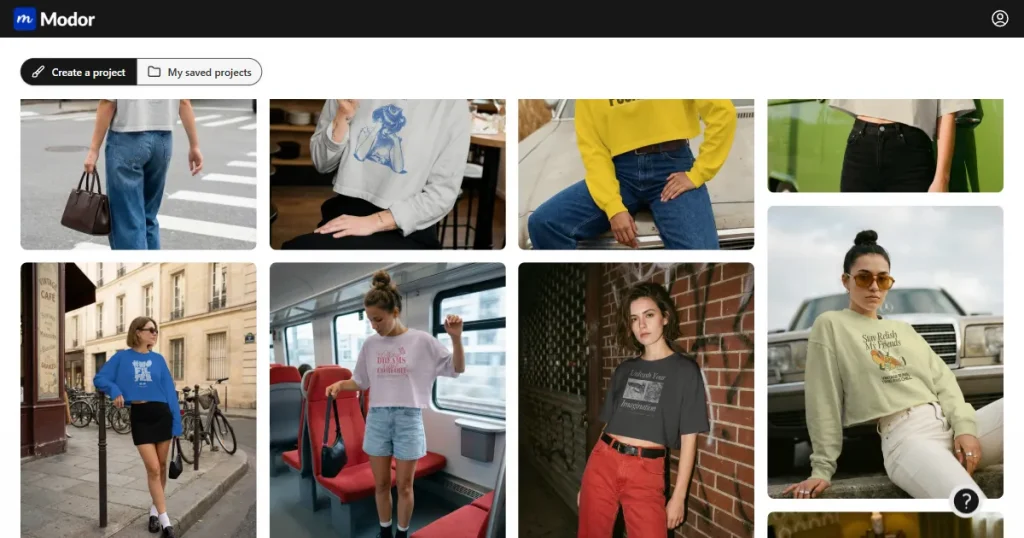
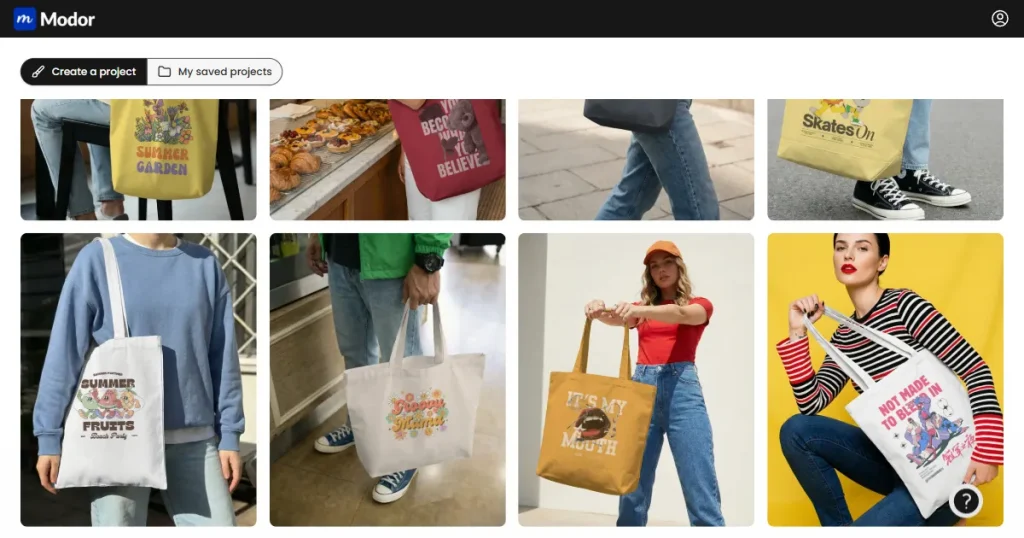
Using the first 2 requires a high budget and time investment, which is why Modor is the best mockup tool, as you can choose from 10,000+ templates across 25+ categories and create high-quality product mockups in a matter of minutes.
Here is a step-by-step guide to using Modor to create product mockups.
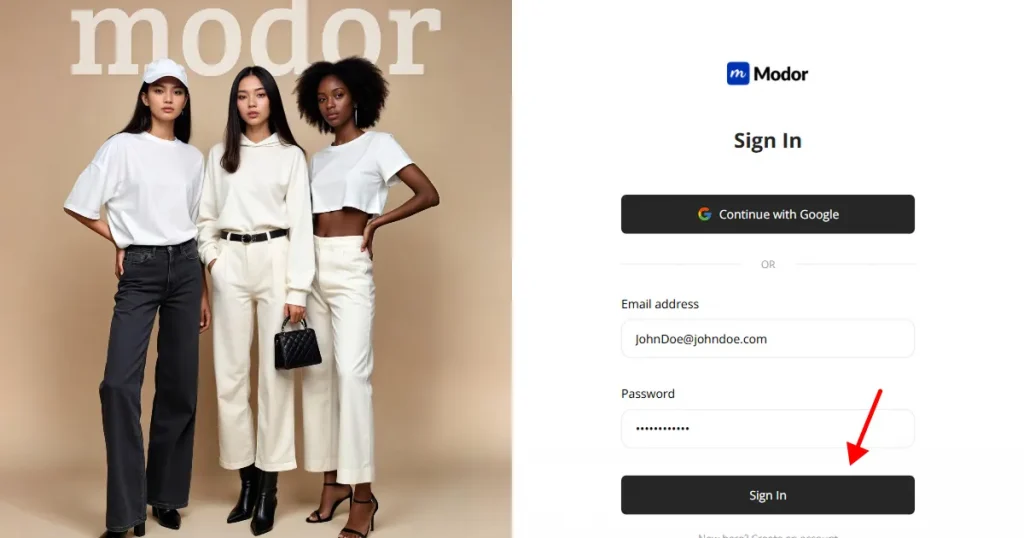
Step 1: Create an Account
The first step to create a mockup is to create an account with Modor by signing up for the tool by entering your email address and password, or going for the Gmail login method, which is much faster.
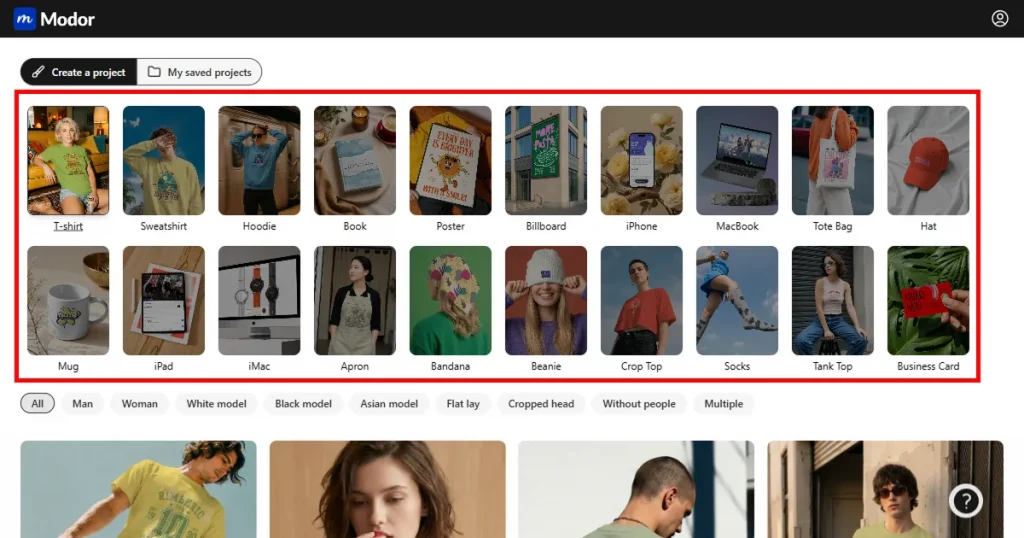
Step 2: Select Category
Once you log in to the tool, you will find a bunch of categories to choose from. You can choose any of the category according to your need.
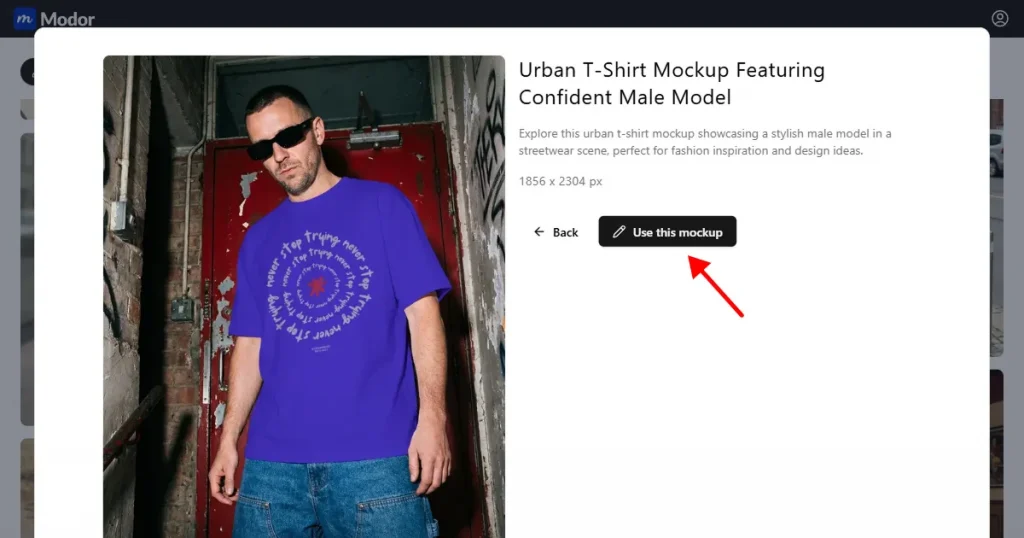
Step 3: Select a Mockup Template
Next, select a mockup template that fits your branding, then click Use this mockup to create a project.
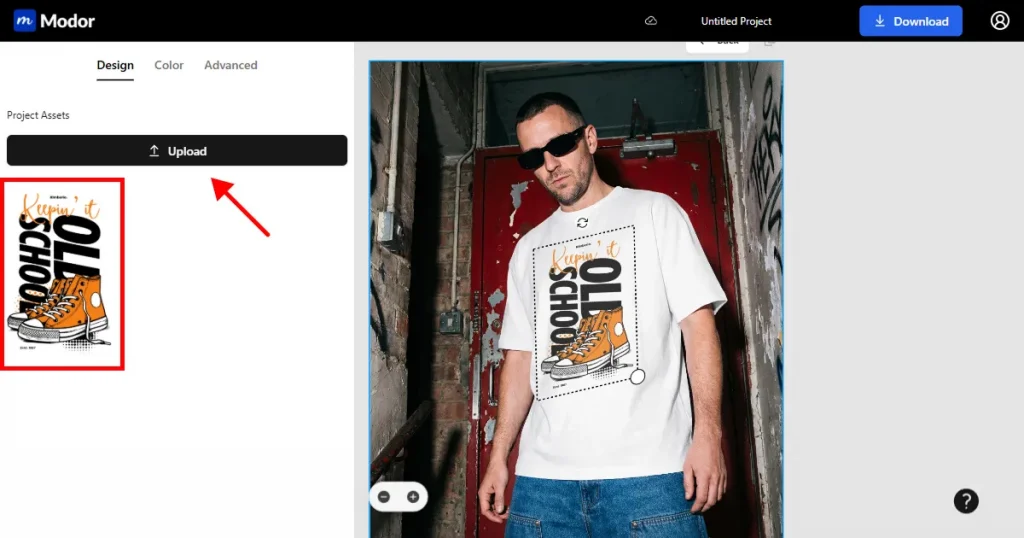
Step 4: Upload Your Design
Once inside the project, you can upload your design by clicking the Upload button. Modor’s AI will automatically place the design on your mockup in the right perspective and lighting.
Step 5: Change Color
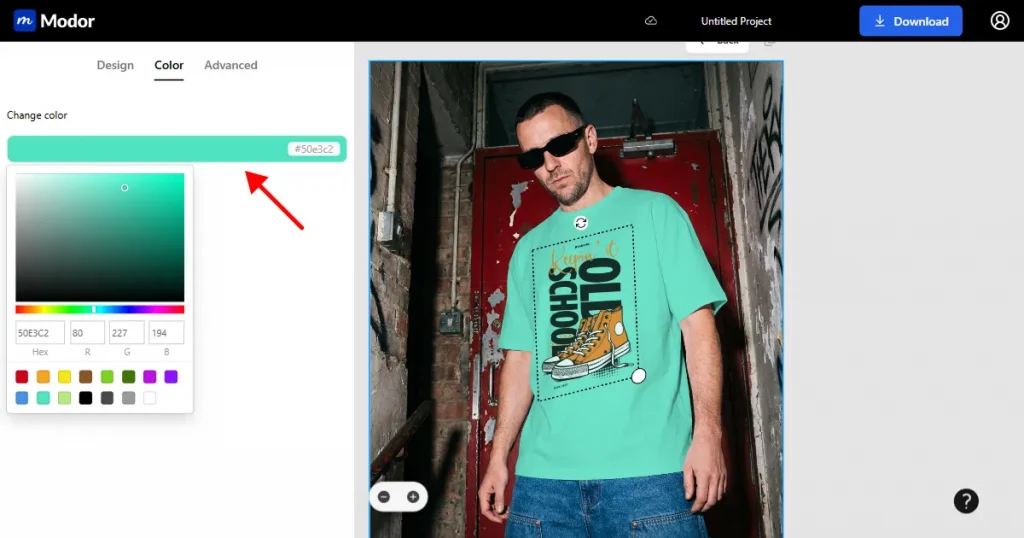
Next, you can change the T-shirt’s color by clicking the Color tab and selecting a color from the Color tool, or by entering RGB values or a Hex code.
Step 6: Use Advanced Editing Tools
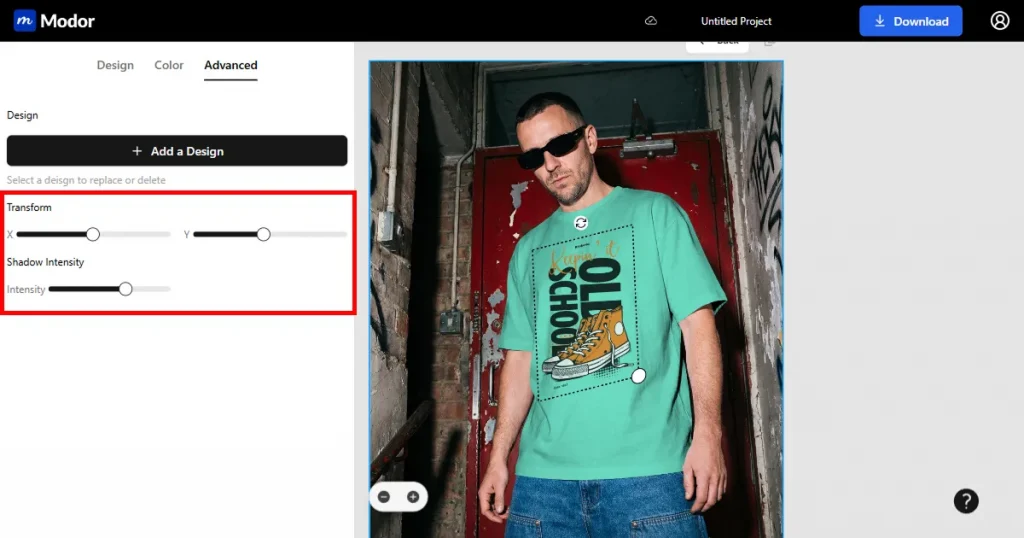
Click the Advanced tab to access the Transform and Shadow intensity tools, which help you refine and increase the realism of your mockup.
Step 7: Export Your Product Image
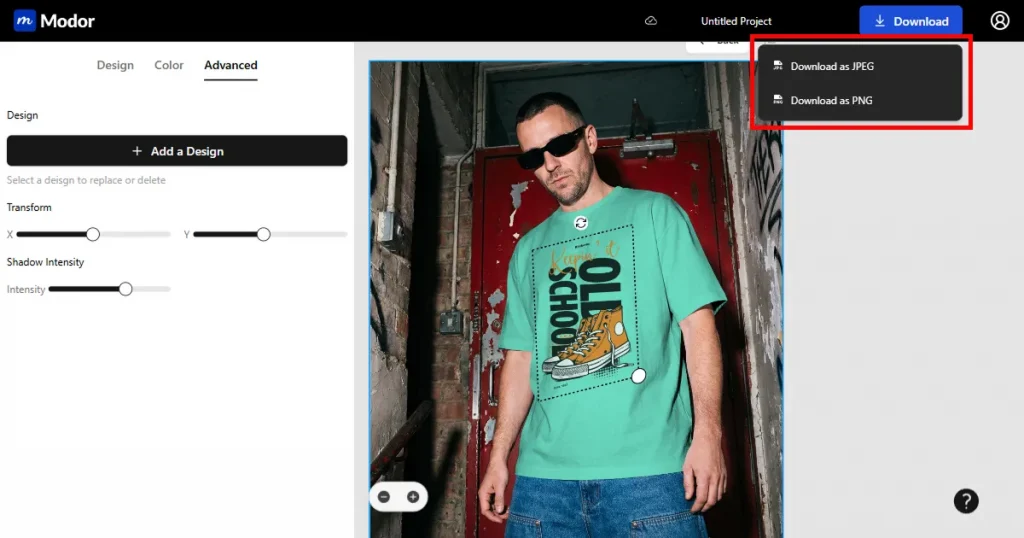
Finally, you can export the product mockup by clicking the Download button and selecting PNG or JPG format. The mockup will be downloaded to your device as a ZIP file. You can extract it and use it in your store.
6. Decide Where to Sell Your Products
Once your mockups are ready, choose the right sales platform for your target audience.
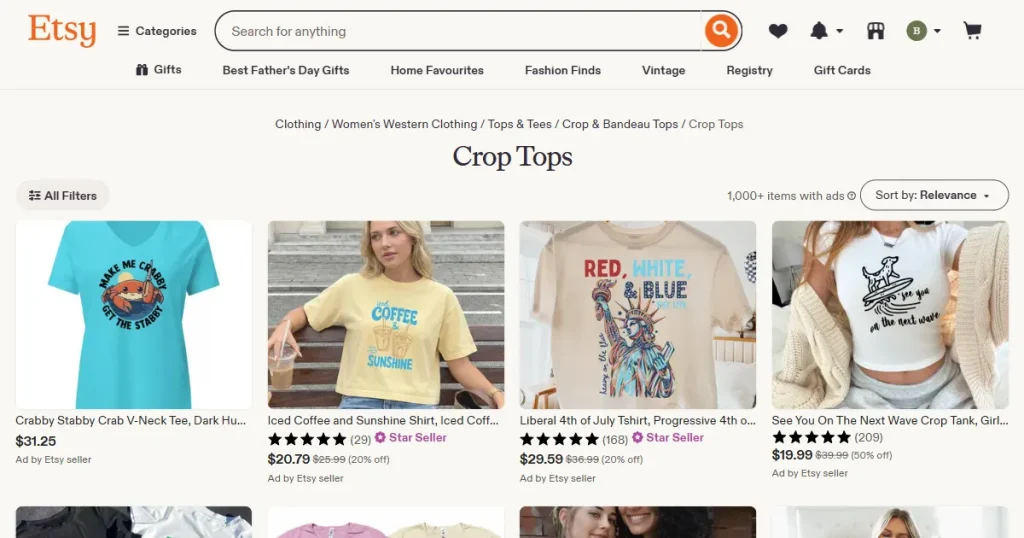
Established e-commerce platforms: Ecommerce platforms like Etsy can help you get your initial customers if you don’t already have an established customer base. However, they often come with higher fees, increased competition, and leave you at the mercy of the platform, which can limit your reach or ban you completely.
Create your own website: This is the preferred method for established creators who already have an audience coming to their products. This allows you to build better relationships with your customers and generate recurring revenue.
Hybrid method: By using a hybrid method of combining both e-commerce platforms and creating your own website, you can get initial traction and convert them into long-term customers.
7. Set up Your Pricing Strategy
The next step in learning how to start a print-on-demand business is building a pricing strategy that fits your niche and product.
To create your pricing strategy, follow these points.
Don’t blindly copy competitors: Don’t blindly copy competitors, as this may compromise your margins. Calculate all costs, including production, shipping, fees, and taxes, before pricing your products.
Target a good profit margin: Aim for a healthy profit margin on every sale. A good benchmark is around 30% profit.
Be cautious when offering free delivery or shipping: Be careful when offering free shipping or returns, as these costs can quickly reduce your profits if they are not included in your pricing.
Don’t lower your prices: Remember that customers don’t always choose the cheapest option. Strong branding, quality designs, and product personalization can justify higher prices and increase revenue.
8. Market Your Products
Now that your store is ready, the final step in learning how to start a print-on-demand business is marketing your products effectively so potential customers can discover and purchase them easily.
Optimize for keywords: Optimize your product page with relevant keywords, compelling titles, and high-quality mockups, so customers can discover your products through search results.
Experiment with social media marketing: Use social media platforms like Instagram, TikTok, and Pinterest to showcase your products and reach new audiences. Focus on creating engaging content that highlights your designs and connects with your target market.
Grow a loyal customer base: Build an email list and stay in touch with potential customers through newsletters, product launches, and promotions. Email marketing can drive repeat purchases and help turn one-time buyers into loyal customers.
Tools You Need to Start a Print-on-Demand Business
If you want to learn how to start a print-on-demand business, understanding the right tools is essential since they help you streamline the process and build a successful store much faster.
Everbee
EverBee is a product research and analytics platform built for Etsy sellers. It helps users identify trending products, analyze competitors, research keywords, and estimate sales performance. Print-on-demand entrepreneurs often use it to validate print-on-demand ideas and find profitable niches before launching new designs.
Key Features:
Etsy product research and sales estimation: Everbee helps you discover profitable products and estimate their sales performance before investing time and money into a niche.
Keyword research and search volume analysis: It also shows what customers are actively searching for on Etsy, helping you target keywords with strong demand and lower competition.
Product trend tracking and validation: Everbee helps you spot emerging trends early and validate print-on-demand ideas using real marketplace data, not guesswork.
Chrome extension for in-browser Etsy research: Everbee also offers a Chrome extension that lets you access product, keyword, and competitor data directly on Etsy, making the research process faster and more efficient.
Pros and Cons
Pros
Cons
Designed specifically for Etsy sellers and POD businesses
Sales and revenue figures are estimates, not exact numbers
Makes product and niche research much faster
Primarily focused on Etsy rather than broader e-commerce platforms
Provides estimated sales and revenue data
Some advanced features require higher-tier plans
Easy-to-use browser extension and dashboard
Limited value for sellers who do not use Etsy as a primary sales channel
Pricing: $29.99/month
Printful
Printful is a beginner-friendly print-on-demand platform that lets you create high-quality products and upload them directly to e-commerce sites like Shopify and Etsy. It also includes a basic mockup tool that lets you create designs directly and upload them to your store.
Key Features:
Various product categories: The main reason people use Printful is its wide range of product mockups. It offers popular categories, including t-shirts, sweatshirts, posters, and hats, and also covers less popular categories like pet clothes.
Provides various printing techniques: Printful offers direct-to-garment printing and embroidery, allowing sellers to customize a wide range of products with high-quality, on-demand designs.
Seamless integration with e-commerce platforms: Printful offers integration to platforms like Etsy, Shopify, and Amazon, making it easy to connect your store and automatically fulfill customer orders.
Has a basic built-in mockup tool: Apart from that, Printful also has a mockup tool you can use to create product mockups fast. But there is no variety, and the templates look generic, so it’s better to use a dedicated mockup tool.
Provides print-on-demand services globally: Printful has fulfillment centers in multiple countries, enabling sellers to reach customers worldwide with faster shipping and local production.
Pros and Cons
Pros
Cons
Easy to use and lets you go from a raw design to a ready-to-sell product in minutes
Limited customization options in the built-in mockup generator
Fast fulfillment times help deliver products to customers quickly
Mockups can look generic and may not help products stand out
Known for consistent print quality and reliable product materials
Product costs are higher than some competitors, reducing profit margins
Offers a free plan, making it accessible for beginners
Fewer customization features compared to some specialized POD platforms
Pricing: $24.99/month
Modor
Modor is an AI-powered online mockup generator that lets you create photorealistic product mockups in seconds without needing Photoshop or design skills. It is designed specifically for print-on-demand business owners to create professional product images without design skills.
Key Features:
Easy to use: Modor uses a drag-and-drop editor, making it one of the easiest and fastest tools for creating product mockups.
AI-assisted placement: Modor’s AI-assisted placement ensures your designs are correctly placed across fabric folds, with realistic lighting, perspective, and shadows.
Largest template library: With over 10,000 mockup templates across 25+ categories, Modor has one of the strongest collections, with new templates added every week.
Advanced customization features: Unlike other mockup tools, Modor lets you enhance shadows and transform designs to make them look like product images.
Bulk mockup creation: Modor also supports creating multiple mockups in a single project and exporting them together.
High-quality downloads: Modor lets you download its mockups in the highest possible quality without watermarks and permits commercial use, even for free templates.
Pros and Cons
Pros of Modor
Cons of Modor
Beginner-friendly and easy to use
Requires an internet connection because it is web-based
Free mockup generator with commercial-use templates
Frequent use requires a paid subscription
Large library of mockups and templates across multiple categories
Supports bulk mockup creation and export
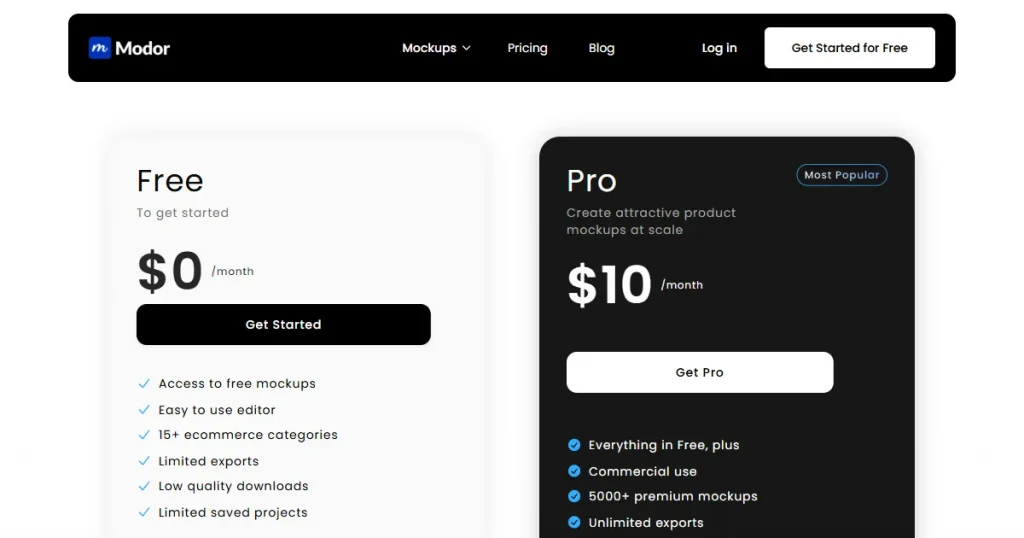
Pricing: $10/month
Final Thoughts
A print-on-demand business model remains one of the easiest and most popular ways to start selling online because of its low startup costs and inventory-free model, but many beginners fail because they do not understand the right process of how to start a print-on-demand business successfully.
That’s why it is important to follow the exact steps laid out in this guide and use Modor to create product mockups. It offers unmatched ease of use, 10,000+ mockup templates, bulk mockup creation, high-quality, watermark-free exports, and a commercial license even with the free templates.
FAQs
How to start a print-on-demand business?
To start a print-on-demand business, choose a profitable niche, create designs, select a POD supplier, create product mockups with Modor, set up an online store, and market your products.
Is the print-on-demand business profitable?
Yes, a print-on-demand business model can be profitable if you choose the right products, maintain healthy profit margins, and market your store effectively.
What sells best on print on demand?
T-shirts, hoodies, sweatshirts, mugs, posters, and personalized products are a few of the best-selling print-on-demand ideas you can use.
What are the best print-on-demand ideas for beginners?
Some of the best print-on-demand ideas for beginners include custom t-shirts, mugs, tote bags, posters, and niche-focused apparel.
What is a print-on-demand business model, and how does it work?
The print-on-demand business model allows you to sell custom products that are printed and shipped only after a customer places an order.
How to start a print-on-demand business on Etsy with no inventory?
You can start a print-on-demand business on Etsy by connecting a POD supplier to your Etsy store and listing products without purchasing inventory upfront.
Discover the top 11 Printful alternatives and best print-on-demand companies for 2026. Compare custom product fulfillment and the best POD platforms to scale.
Print-on-demand platforms are digital services that allow you to sell custom-designed products without buying or storing inventory. Items are manufactured, […]